
Caracas, Venezuela — Nearly a month has passed since the 90-day limit on Delcy Rodríguez’s term as acting president of Venezuela expired. Now, various opposition groups are calling for presidential elections amid political uncertainty in the country.
The matter of how elections should proceed — if at all — is complicated by a number of issues including disputed results in Venezuela’s 2024 elections and the United States’ capture and arrest of President Nicolás Maduro on January 3.
Roberto Abdul, a political activist who helped organize primary elections for Venezuela’s opposition movement in 2023 and was detained by the government that same year, told Latin America Reports that the legitimacy of Maduro’s presidency plays a role in the current debate surrounding Rodríguez, who was Maduro’s vice president at the time of his capture.
He said that “While the [National Electoral Council] did not present the [voter] tally sheet” to prove Maduro’s victory in elections, the opposition did manage “to present nearly 83% of the tally sheets issued by the machines” showing their candidate, Edmundo González, won the elections.
Because Venezuelan vice presidents are not elected but rather appointed by the president, as a Maduro appointee, the question around the legitimacy of Rodríguez’s position within the government further muddies the waters.
“Therein lies the problem from a constitutional standpoint,” he said.
Further, Article 233 of the country’s Constitution distinguishes between the temporary and permanent absence of a president, while Article 234 outlines the procedure for governing the country in the president’s absence.
According to Article 234, in the event of a temporary absence, the vice president takes control of the government for a period of 90 days — a period which can be extended by the legislature for another 90 days.
However, if the president’s temporary absence lasts for more than 90 days, the National Assembly (Venezuela’s legislature) must decide by a majority vote whether the president’s absence should be considered permanent, which would initiate new elections within a 30-day period.
Abdul explained that the unprecedented circumstances surrounding Maduro’s absence are frustrating the very definition of his absence.
On January 3, U.S. special forces teams assaulted Venezuela’s capital, Caracas, and captured Maduro and his wife, Cilia Flores, and took them by sea and air to New York to face drug trafficking charges. The legality of the dictator’s rendition has been questioned by international legal experts.
Maduro’s trial could take months, if not years, far exceeding the time limit for a temporary absence (maximum 180 days) afforded by Venezuela’s Constitution.
Due to this unique circumstance, there is a debate over how to apply Articles 233 and 234 to Maduro’s absence. Furthermore, Abdul points out that, given the lack of separation of powers, the interpretations of the Supreme Court and other bodies tend to be “biased” in favor of the Chavista government, rather than strictly adhering to the spirit of Constitutional law.
The National Assembly slow rolling the debate
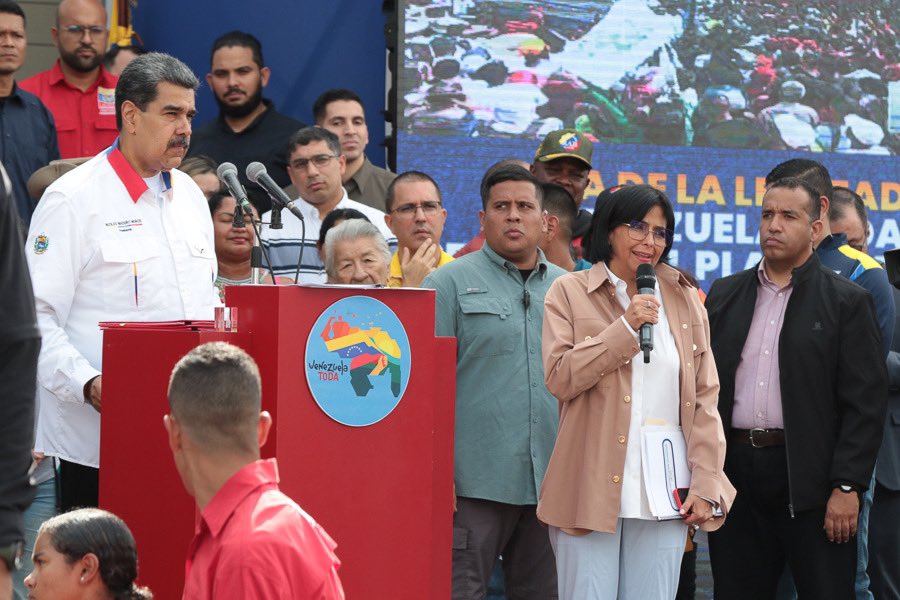
The National Assembly, which is controlled by government loyalists, was supposed to begin debates around the expiration of Rodríguez’s first term as acting president between April 6 and 10. The debate has yet to take place, even though her term expired on April 5.
Jorge Rodríguez, president of the National Assembly and Delcy’s brother, has made comments suggesting that the legislature’s main focus is restarting Venezuela’s economy, and not new elections.
“The most important thing right now is the economy. It’s essential that the Venezuelan economy grows so dynamically that the population feels this entire process has been worthwhile,” the parliamentary leader told Spanish newspaper El País. “Furthermore, we are engaged in a profound dialogue with all opposition groups that remain within the bounds of the Constitution, including those living abroad. I couldn’t tell you exactly when, or even what the first election will be, because there’s so much to do.”
Other Maduro loyalists are also pushing back on holding elections. Diosdado Cabello, Minister of the Interior and Justice, said last week during an event, “Now they’re [the opposition] calling for elections because President Nicolás Maduro is completely absent. Well, you were telling us that Nicolás Maduro didn’t win [elections in 2024], so how is it that now you’re demanding the complete absence of someone who didn’t win?”
Even if the legislature declares Maduro’s absence permanent, Abdul argues there is much to do to ensure free and fair elections in Venezuela.
First, he said, the National Electoral Council (CNE) must appoint a new board which is the result of a bipartisan agreement. “We must try to ensure it adheres as closely as possible to the rules to generate the greatest credibility and the highest possible levels of legitimacy,” he stated.
Another important consideration, Abdul argued, is whether to hold only presidential elections, or a wider “mega-election” that would decide National Assembly seats, governorships, and mayoral offices.
Among other challenges facing any impending elections would be facilitating voting for the 4.5 to 5 million eligible Venezuelans living abroad; technical assistance from a foreign body like the United Nations to facilitate observation; and reversing political disqualifications and reinstating political parties that were banned during Maduro’s administration.
“It is a complex process, but it is achievable; it’s not like you’re sending someone to the moon out of thin air—it’s something we’ve already gone through,” Abdul concluded.
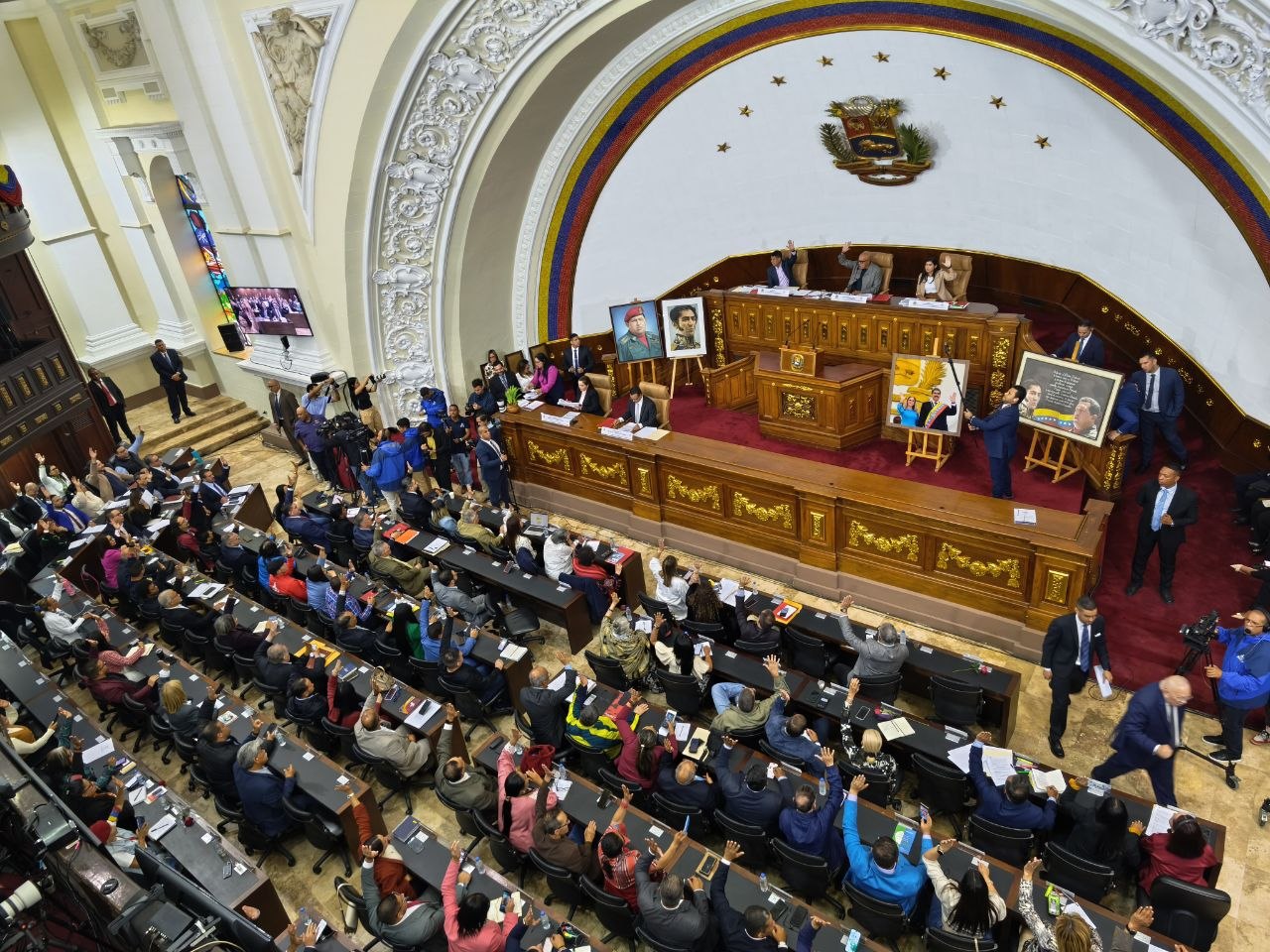
Featured image: Venezuela’s National Assembly votes on a law to streamline administrative procedures in March 2026.
Image credit: The National Assembly of Venezuela via X.