
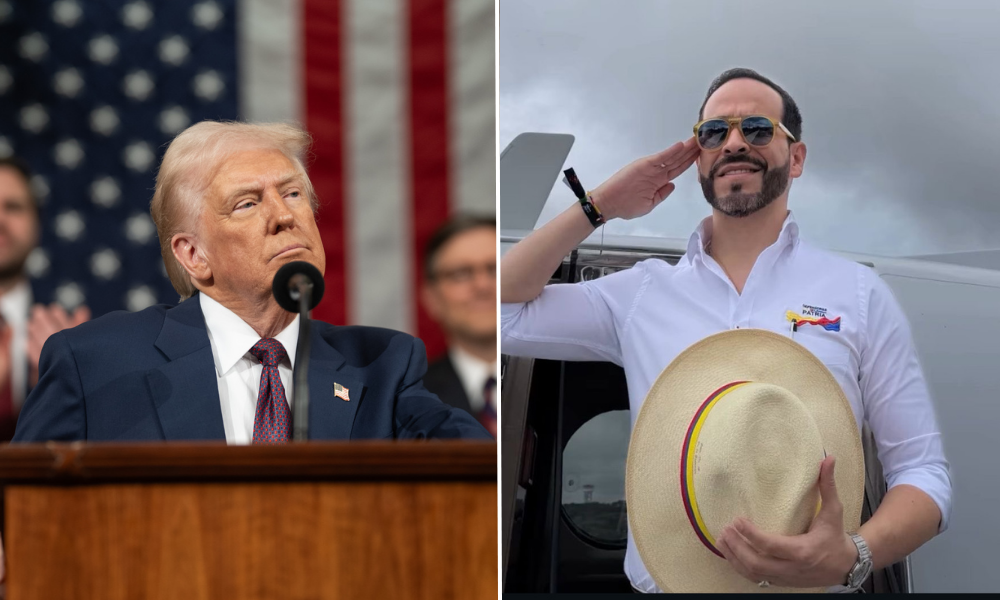
Colombia is poised to serve as a model of U.S. President Donald Trump’s foreign policy in Latin America under president-elect Abelardo de la Espriella.
De la Espriella’s victory in Colombia’s presidential election on Sunday was celebrated by Trump, and the two share a commitment to cracking down on crime with military force and backing pro-market economic policies that could spur renewed U.S. investment in Colombia.
De la Espriella, a naturalized U.S. citizen who worked for more than a decade as a criminal defense attorney in Miami, was endorsed by Trump in his presidential bid as a far-right political outsider.
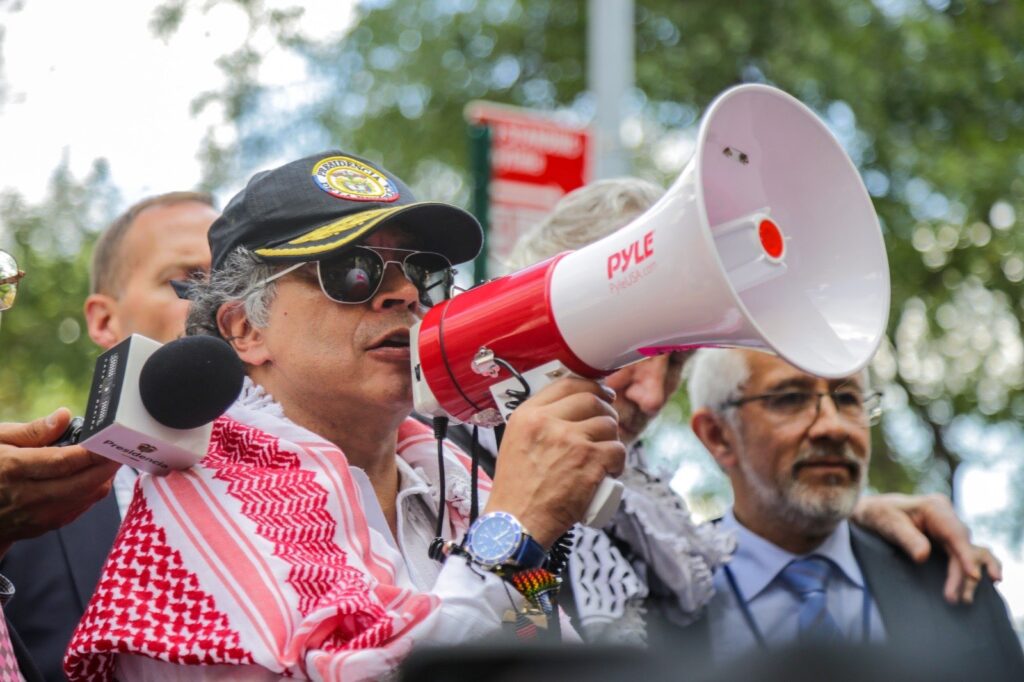
Colombia and the United States are expected to repair their longstanding alliance, which was marked by tensions under bombastic outgoing President Gustavo Petro.
“I think Trump will be willing to invest resources in terms of military, money, even investment in Colombia to try to reinforce this alliance and make, if you will, de la Espriella and Colombia the beachhead for security,” said Christopher Sabatini director of the Latin America Programme at Chatham House, a London-based think tank.
Colombia is expected to welcome stronger and more direct U.S. involvement in its efforts to reduce drug trafficking, illegal mining and armed conflict, which de la Espriella has promised to combat with a “mano dura,” or iron fist. On the campaign trail, the far-right candidate pledged to dispense with Petro’s “Total Peace” strategy of negotiating with armed guerrilla groups and cartels, promising to build 10 maximum-security mega-prisons like those constructed in El Salvador under President Nayib Bukele.
“I will wipe out narcoterrorism and those who I’ve declared a military target like cockroaches, like rats. I will unleash upon them the wrath of God never seen before,” de la Espriella told the Associated Press during the campaign.
The president-elect also advocated for opening U.S. military bases in Colombia and carrying out joint operations to fumigate coca crops and bomb narco-trafficking groups.
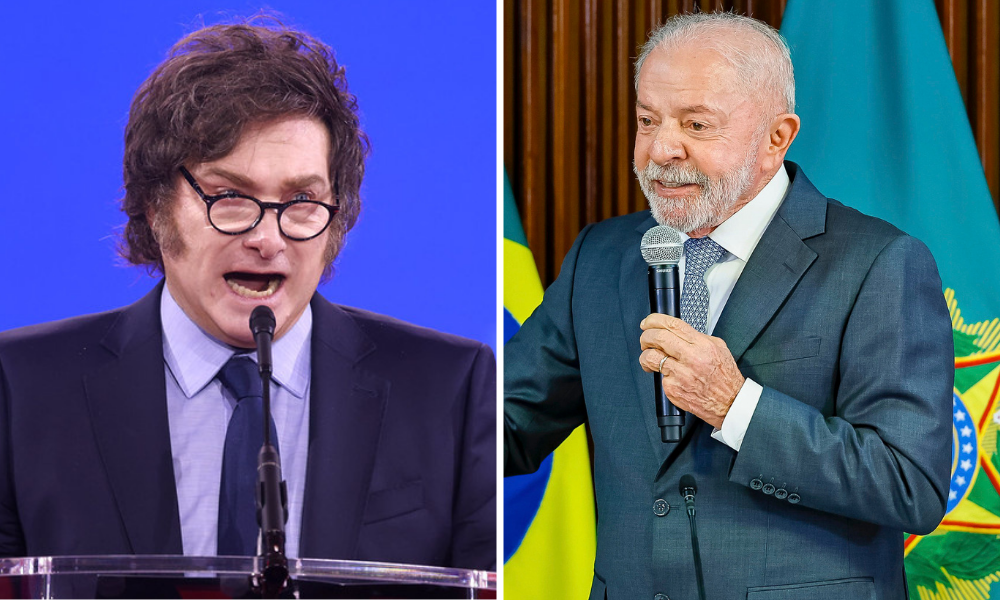
Under de la Espriella, Colombia is also expected to join the “Shield of Americas”, an international alliance launched in March by the Trump administration to coordinate an aggressive crackdown on transnational cartels. Importantly, the alliance does not yet include Brazil, Mexico, and Colombia, ruled by prominent leftist leaders who were not invited to participate.
In this militant approach, Colombia is swinging back toward the policies of Iván Duque (2018-2022), Petro’s predecessor, who also “embraced the deployment of the military,” said Ivan Briscoe, a Latin America expert with International Crisis Group.
“We are reentering a period of storm-and-thunder policies toward crime which are not novel, have been tried before and have been found wanting, and thus we will be dealing with the consequences and the aftermath for years to come,” said Briscoe.
“That may not be the only solution, but quite frankly people are tired of these other alternatives,” Sabatini said.
Briscoe also warned that the United States will likely prioritize its own goal of stemming the flow of drugs into its borders, while Latin American countries are more concerned with tackling insecurity at home tied to organized crime.
The question, Briscoe added, will be whether Trump is primarily interested in coming down hard on crime and drugs, or having a “loyal audience for him and his government” in Latin American leaders.
It is also unclear how much money the United States is willing to put behind security operations in Colombia, with Trump aggressively slashing foreign assistance since returning to office.
Others argue that military cooperation may be secondary to expanding economic ties.
The U.S. is Colombia’s largest trading partner and source of Foreign Direct Investment, but the latter has been waning in recent years.
“Mainly, from the Colombian part, the objective of the relationship is economic. It is commercial, it is investment, it is tourism and we could expect, then, some advances in that sense,” said Javier Garay, a political scientist at the Universidad Externado de Colombia.
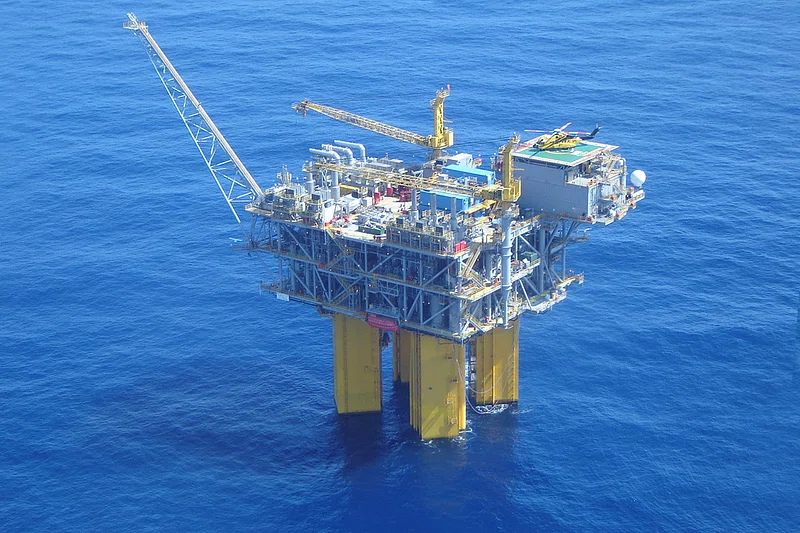
De la Espriella hopes to inject life into the country’s fossil fuel industry through fracking and oil and gas exploration, which was paused under the Petro administration.
The ultimate success of the relationship between Colombia and the United States may hinge on relations between the two presidents.
“We know that Mr. Trump is very mercurial,” Garay said. “He changes his decisions and it may be one day he is a friend, and another he changes because the other president or other government doesn’t make what he wills,” Garay said.
There is also a risk that Trump loses interest in Latin America and turns U.S. attention elsewhere, according to Sabatini. In Venezuela, the conservative opposition to Nicolas Maduro celebrated his ouster, only to be disappointed when it failed to gain control in his wake.
In that vein, de la Espriella might follow the lead of other right-wing Latin American leaders and hedge Colombia’s bet on Trump, such as by maintaining a strong relationship with China, forming other alliances and ensuring its military isn’t at the beck-and-call of of the United States.
““These are going to be the ways that governments manage this extremely complicated relationship with the U.S.,” Briscoe said.
But for the meantime, with de la Espriella set to take office on August 7, Trump is projecting optimism about the future of bilateral relations.
“I look forward to working together to build a powerful relationship between Colombia and the United States of America, which will bring new levels of Greatness for both of our Countries,” Trump wrote on Truth Social this week.
Featured image description: Split image of U.S. President Donald Trump (left) and Abelardo de la Espriella (right).
Featured image credit: @POTUS and @ABDELAESPRIELLA via X.