
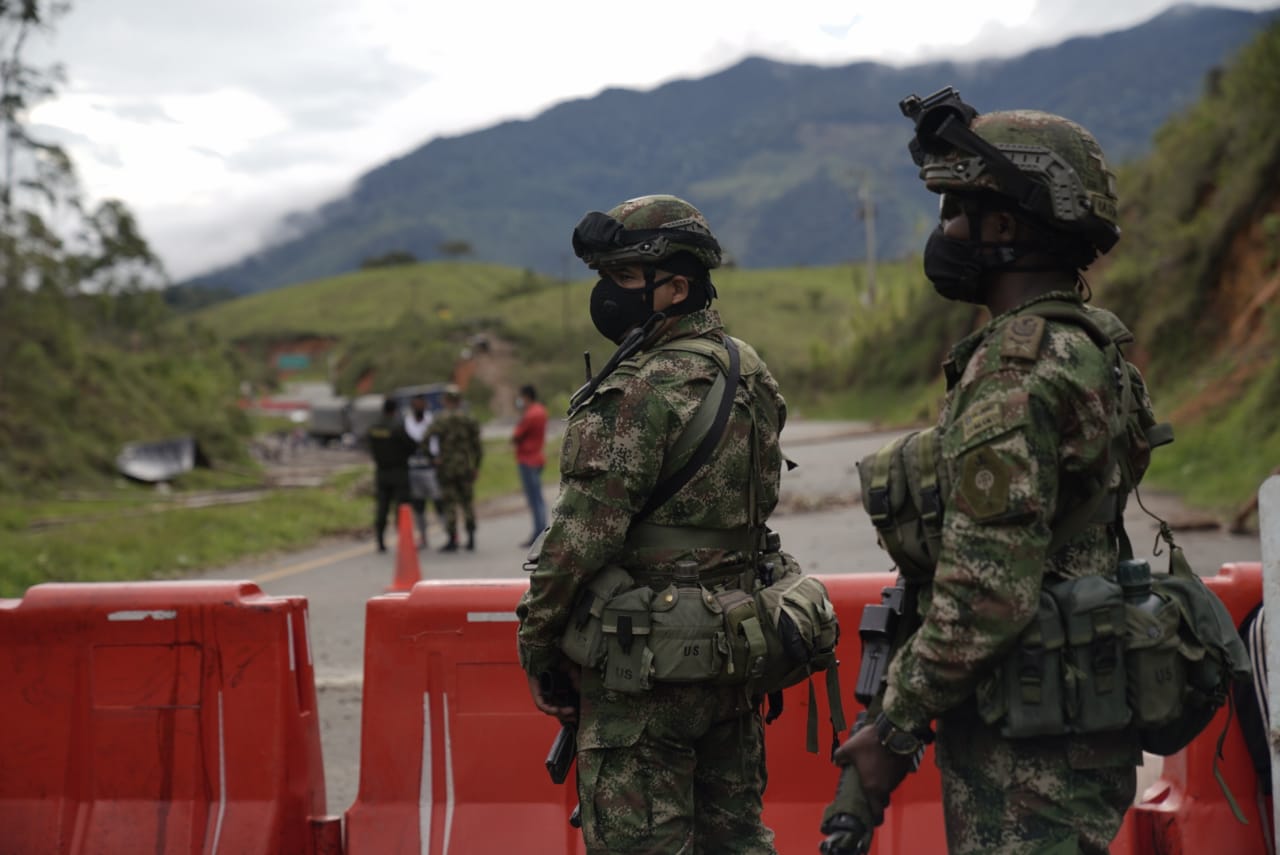
Medellín, Colombia – Security forces in Colombia and Ecuador have launched a joint operation to target criminal groups on their shared 600km border, Colombian Defense Minister Pedro Sánchez announced yesterday.
As part of “Operación Espejo”, or “Operation Mirror”, the two nations have identified five target zones which will see a permanent presence of Colombian and Ecuadorian military forces and the use of drones, anti-drone systems, helicopters, gunships and patrol boats.
The announcement came the same day that Ecuador raised tariffs on Colombia to 50%, which it described as a “security fee” for its neighbor’s failure to police the border.
In response, Colombia’s Commerce Minister drafted a reciprocal 50% import tax which once approved is set to be in force until the Ecuadorian tariffs are lifted.
Following the announcement of the joint operation, Sánchez reaffirmed that the “enemy is armed groups, not nations”.
The Defense Minister also celebrated the destruction of 45 drug laboratories in the three preceding days of operations in the Colombian Pacific department of Nariño. 20,000 security personnel have already been stationed on the Colombian side of the border in Nariño and Putumayo. The United States will also provide intelligence assistance to help identify areas of illegal activity.
“The problem of drugs is not only a health problem; while consumption increases in European countries and the U.S. […] here we are suffering from the production,” said Sánchez. While the defense minister underlined that the joint operation will respect the possibility of dialogue with some groups, bombing border zones has not been ruled out.
“We will act with full force against crime […] we will not tolerate the crimes, terrorism, extortion, kidnapping, and forced displacement that these criminals commit,” he added.
The most recent tariffs mark the latest escalation in the neighbours’ trade back and forth dispute that commenced in January. Tough-on-crime Trump ally Noboa has claimed Colombia is failing to “implement concrete and effective measures in the area of border security.”
Colombian President Gustavo Petro imposed a retaliatory 30% tariff in January whilst defending his record on crime and praising the two countries’ historically close security relationship.
The trade dispute has been generating anxiety on the part of businesses and workers in both countries, with ex-ministers calling for the reopening of dialogue between the two nations.
Featured image: A Colombian military checkpoint
Image credit: @Mindefensa via X.