
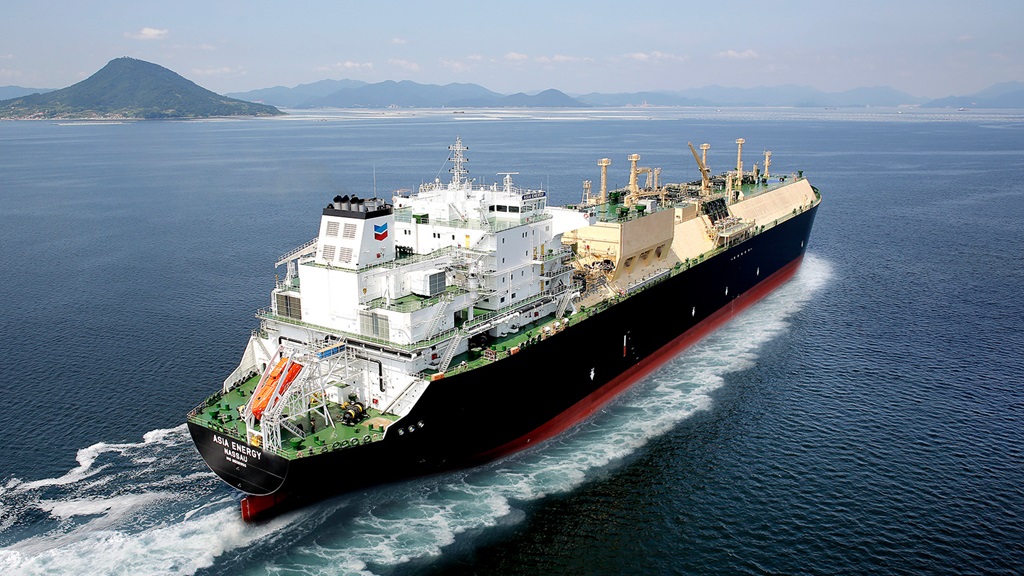
Santiago, Chile – Just hours before Venezuelan President Nicolás Maduro’s court proceedings began in New York on Tuesday, January 6, U.S. President Donald Trump dispatched a fleet of 11 Chevron oil tankers to the Venezuelan ports of José and Bajo Grande to load crude oil.
The move marks the launch of a unilateral operation aimed at loading crude oil and recovering billions in unpaid debts.
In the days leading up to the military operations in Venezuela, the American leader had made his intentions to assert control over the Latin American country’s oil industry clear:
“I am pleased to announce that the Interim Authorities in Venezuela will be turning over between 30 and 50 MILLION Barrels of High Quality, Sanctioned Oil, to the United States of America,” Trump said on Truth Social.
“This Oil will be sold at its Market Price, and that money will be controlled by me, as President of the United States of America, to ensure it is used to benefit the people of Venezuela and the United States,” he added.
Encouraging the return of U.S. companies to the sector, modernizing deteriorated infrastructure, and boosting productivity are expected to be among the U.S.’s priorities. The plan would also seek to recover oil assets expropriated in 2007 under then-President Hugo Chávez from U.S. companies ExxonMobil and ConocoPhillips.
“It was the greatest theft in the history of America. Nobody has ever stolen our property like they have. They took our oil away from us. They took the infrastructure away and all that infrastructure rotted and decayed, and the oil companies are going to go in and rebuild it,” Trump said during an open press conference on Sunday, January 4.
American energy giant Chevron will be responsible for loading the crude oil, as it is the only western company holding a special license to operate between Venezuela and the United States. The license was first granted in 2022 under the administration of former President Joe Biden and was later modified by Donald Trump.
The license was initially granted to Chevron as part of an effort to ease gas prices, although the measure was modified following Trump’s election in 2024.
Under its current terms, the company is authorized to extract crude oil, transport it to the U.S., sell it, and use the proceeds to recover part of the multibillion-dollar debt owed by Venezuela’s oil industry to American businesses.
Chevron, however, does not pay royalties or taxes that would benefit the Venezuelan state.
Amid the risks surrounding the operation, the company said:
“Chevron remains focused on the safety and well being of our employees, as well as the integrity of our assets. We continue to operate in full compliance with all applicable laws and regulations.”
After U.S. sanctions were imposed on Venezuela’s oil industry in 2019, China became the country’s main buyer of crude. By 2025, the superpower accounted for 80-82% of Venezuela’s oil exports, benefiting from steep discounts and using so-called “surplus tankers” to bypass sanctions. The U.S. ranked second, at 14%.
Over the past month, U.S. naval vessels have taken up strategic positions off Venezuela’s coast, restricting access to foreign tankers attempting to enter the area without authorization – effectively controlling crude oil exports and severing the flow of crude to other markets.
American efforts go beyond recovering outstanding debt: the country aims to revive and strengthen the oil industry, attract foreign investment, and create new jobs.
Experts say Trump’s recovery plan will not deliver immediate results, and is expected to be a long and costly process.
Francisco Monaldi, a Venezuelan economist and energy expert, said on X that Venezuela could produce four to five times its current output of about one million barrels per day from a purely technical standpoint. He cautioned, however, that reaching that level would require more than a decade of sustained effort and investments exceeding $100 billion USD to modernize the oil industry.
Monaldi stressed that meaningful change would require not only an influx of foreign investment but, above all, deep structural reforms.
“Without firm legal protections, policy continuity, and political legitimacy, large-scale investments with long development horizons will not materialize,” he argued.
According to the Organization of the Petroleum Exporting Countries (OPEC), Venezuela holds the largest proven crude oil reserves in the world, ahead of Saudi Arabia and Iran, as reported by Al Jazeera.
The issue, then, does not pertain solely to resources, but also to the country’s economic policies and productive capacity.
Venezuela’s economic outlook remains unpredictable and, when combined with the country’s deep political uncertainty, it makes for a particularly compelling case study.
The coming months are expected to offer clearer indications of the future direction of the Venezuelan economy and its oil industry.
Featured image via Chevron