
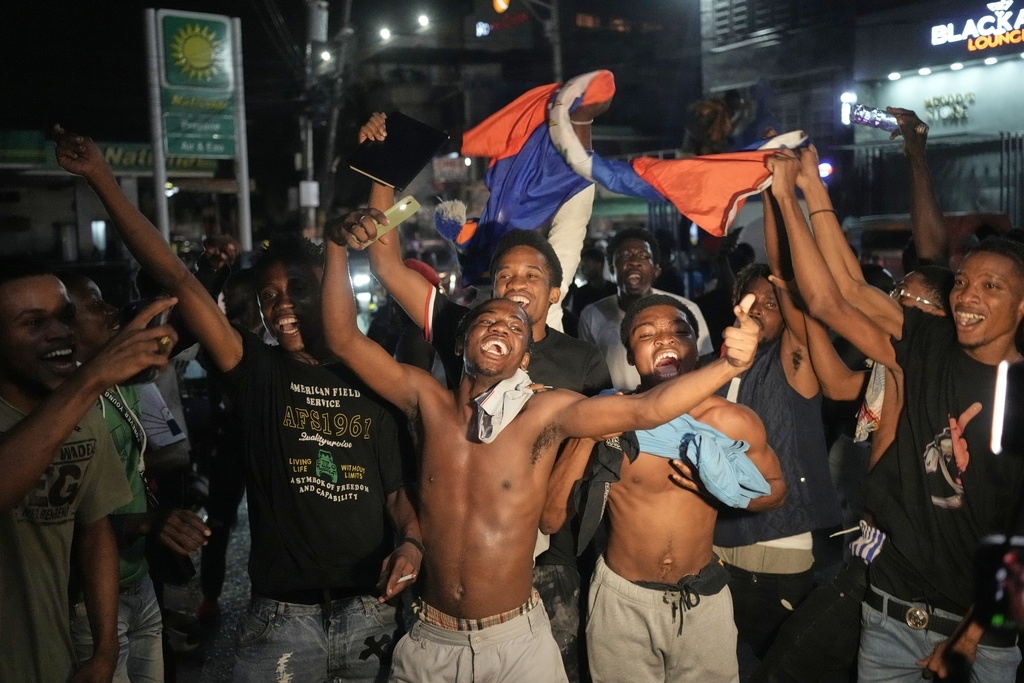
The streets of Haiti’s capital Port-au-Prince bore witness to a rare phenomenon on November 18 — thousands of Haitians joyously celebrated the qualification of the Haitian national team for the 2026 World Cup. The team’s qualification is historic as they became the first Haitian side to qualify for the prestigious soccer tournament since 1974.
The Haitian team secured its qualification with a 2-0 victory over Nicaragua with goals from Louicius Don Deedson and Ruben Providence. The match was played in Willemstad, Curaçao; the Haitian team has had to play all of its home matches outside of Haiti because of security concerns at home.
Armed gangs control almost all of the Haitian capital and the conflict between the gangs and both national and international security forces have displaced nearly 1.5 million Haitians.
Read more: The future of a nation: A look at upcoming Haitian elections that likely won’t happen
Remarkably, the security crisis also means that the manager of the Haitian national team, Frenchman Sébastien Migné, has never set foot on Haitian soil. Nevertheless, with the help of Migné and an assortment of stars both from Haiti proper and the diaspora, Les Grenadiers finished the campaign top of their qualifying group, beating Honduras, Costa Rica and Nicaragua to the number one spot.
Patrice Dumont, a former Haitian senator from the town of Léogâne, is a longtime football enthusiast. He is a well-known sports commentator in the Caribbean nation and works as a professor of social sciences who specializes in the relationship between sport and international relations.
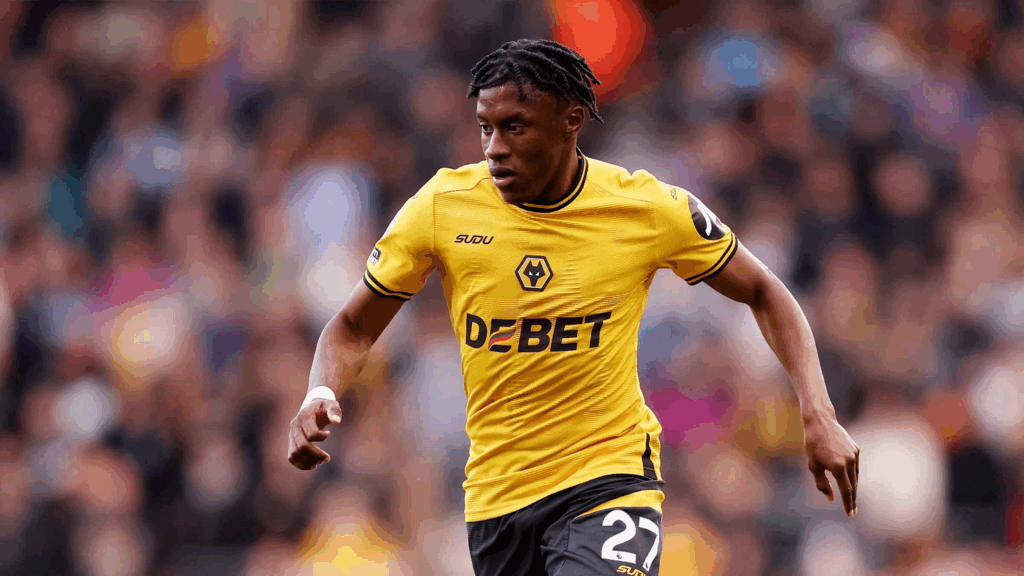
Image Source: Haiti-Tempo via X
Dumont spoke to Latin America Reports about the importance of Haiti’s recent soccer success to the national psyche amid the current crisis.
Dumont identifies the recruitment of talented players from the diaspora as a key element of Les Grenadiers’ success under Migné. Being European, Dumont argues, has allowed Migné to more effectively scout all the most talented footballers of Haitian origin in Europe and elsewhere.
Current first-team players for Haiti include Josué Casimir, who plays for French Ligue 1 team AJ Auxerre, and Hannes Delcroix, who plays for English Premier League team Burnley F.C.
The roster also includes Jean-Ricner Bellegarde, a midfielder for Wolverhampton Wanderers in the Premier League. The current Haitian team is the first to include three players from Europe’s top five leagues. This is part of what makes it, in Dumont’s words, “the best group that we [Haiti] have had for at least 20 years.”
However, Dumont stresses that the contributions of players on the team who were born in Haiti and honed their sporting skills there must not go unappreciated: “We must specify that there are at least five players [on the team] who learned to play football in Haiti … [such as midfielder] Danley Jean Jacques, [midfielder] Leverton Pierre, [right-winger Don Deedson] Louicius, [defender Ricardo] Adé and [right-back Carlens] Arcus.”
Dumont also noted the symbolic weight of the Haitian team’s success in the context of the socioeconomic and political crisis that Haiti currently faces.
“The [Haitian] crisis is multidimensional … [and] profound … there are no democratic institutions … there is no security … [and] the bandits control large amounts of territory,” he said.
The UN reports that nearly 6 million Haitians are currently facing famine, over 60% of Haitians live on less than USD $1 a day, over 60% of the health facilities in Port-au-Prince have ceased to function and violence has continued to spread as the gangs seek to expand their territorial control beyond the capital into the agricultural regions.
In light of the county’s woes, Dumont argues, the Haitian national team has become a particularly powerful, hopeful and unifying symbol as Haitians from all walks of life have consistently demonstrated their support for the team “on social media … and in the streets.”
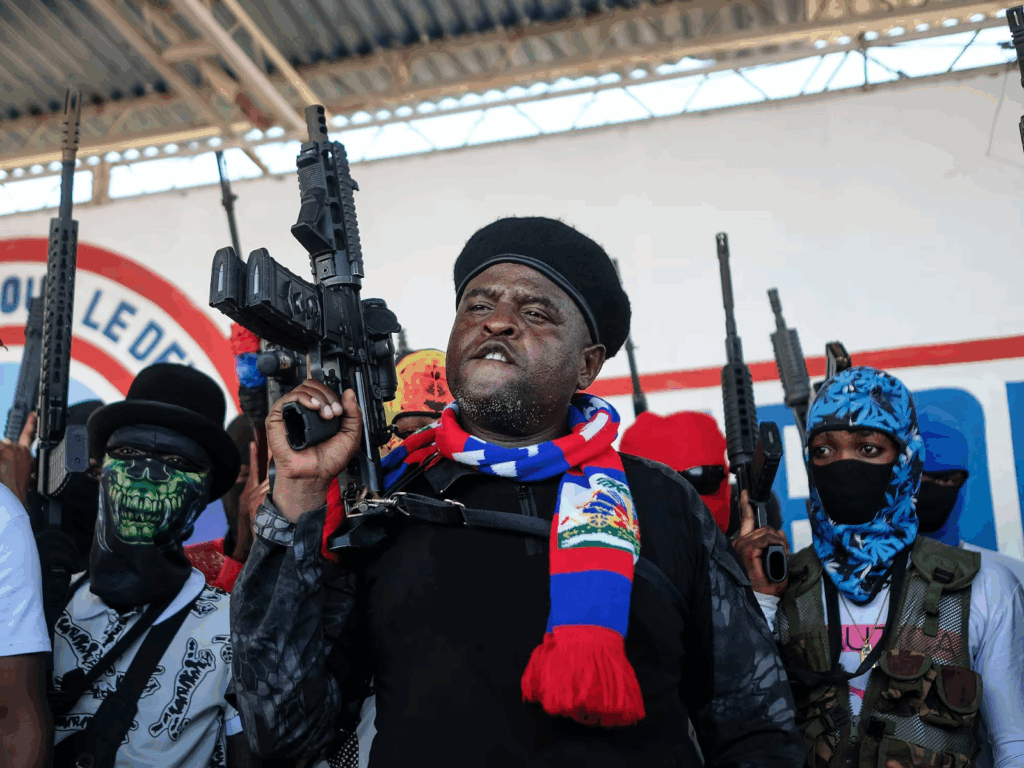
Image Source: Global Folder via X
This is partially attributable to a strong Haitian soccer culture. “We are a people with a great tradition of football,” Dumont explains. “If you ever come to Haiti … you will see the sheer amount of football games, be they 4-a-side, 6-a-side or 11-a-side, played every day, all over the country on tiny pitches.”
The significance of November 18, past and present
The team’s November 18 victory over Nicaragua holds particular historical significance, said Dumont.
“The last battle of national liberation [was fought at Vertieres] … on the 18th November. There, the indigenous forces [of Haiti] commanded by [leader of the Haitian revolution and the first Haitian emperor] Jean-Jacques Dessalines emerged victorious over the French forces.”
The victory of Haitian revolutionaries at the Battle of Vertières against Napoleon’s forces in 1803 marked the end of French colonial rule on the island and thus the birth of the first black-led republic in the world.
This is not the first time that Haitian soccer and the commemoration of this final battle for Haitian independence have become intertwined. Dumont notes that another of Haiti’s best-remembered footballing triumphs occurred “on this date … in 1979 … [when] we won the final [of the Caribbean Football Union Championship] 1-0 against Suriname and became Caribbean champions.”
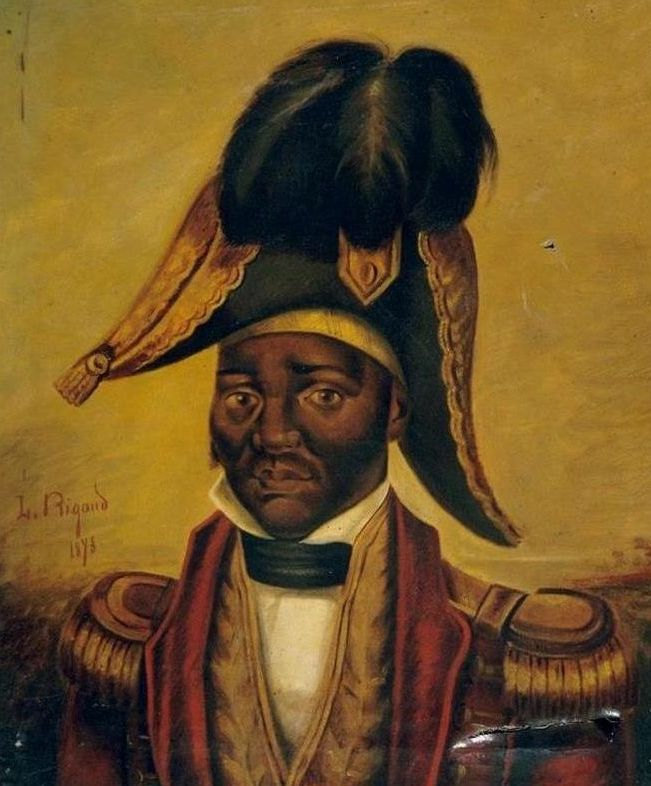
Image Source: Today In History via X
Therefore, Dumont believes that the significance of Haiti’s world cup qualification transcends mere feelings of sporting celebration. The diversity of the Haitian football team, whose range of players hails from the Haitian diaspora, rural interior and cities, has become a “symbol of the unity necessary to [bring about a kind of] Haitian [national] renaissance”.
Thus, the Haitian players have become an emblem of the “spirit and consciousness of the Haitian people” themselves, Dumont concludes.
The role of soccer in conflict
A soccer-related intervention in national conflict is not unheard of.
After his home nation Ivory Coast confirmed their world cup qualification in 2006, Didier Drogba, the former Chelsea football star, delivered an impassioned televised plea to the people of his nation, which had been embroiled in civil war, to lay down arms.
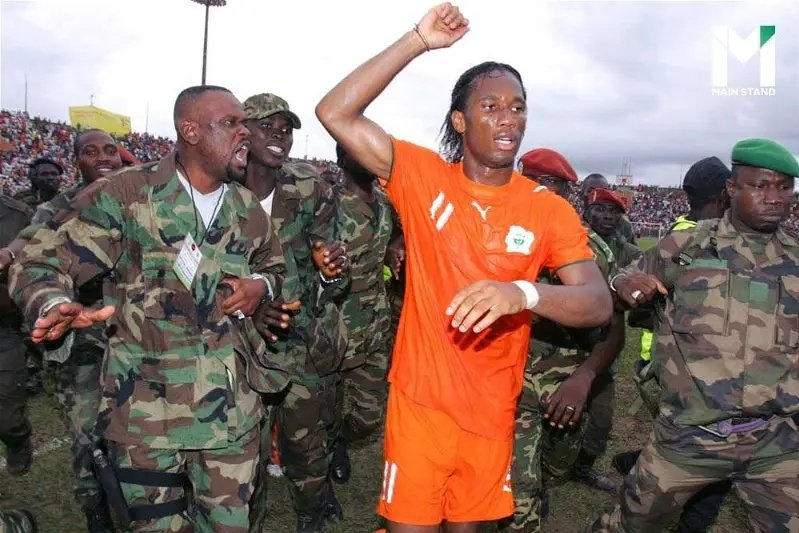
Image Source: TLV(fan) via X
In the following weeks and months, the message was played on repeat throughout the African nation and, not long after the plea, a ceasefire was declared.
Dumont compares Drogba’s efforts to the current efforts of Haitian players to heal the divides that have long plagued Haiti.“The Haitian footballers are trying to do something similar [to Drogba]” by circulating the hashtag #ouvèpeyia (Haitian Creole for #openthecountry) on social media, he said.
The slogan, which has been shared by “the people of Haiti, journalists [and] intellectuals” as well as the players, is meant to express the desire of the Haitian footballers to be able to go to Haiti and celebrate safely with their family members and supporters.
However, the meaning of the slogan has been broadened to encapsulate the Haitian desire for peace and an end to the violence on the island.
However, Dumont fears that the players’ pleas will fall on deaf ears.
“There is a … simple difference between the case of Ivory Coast” and that of Haiti. “Guillaume Soro [the leader of the rebel coalition Forces nouvelles de Côte d’Ivoire (FNCI) in the Ivorian civil war] was not a gangster … and the soldiers of Guillaume Soro were not gangsters.” Nor was, Dumont adds, the Ivorian President at that time, President Laurent Gbagbo.
In Haiti, Dumont says, “those who attack [civilians], those who burn houses in Haiti are … gangsters” who have no interest in ideology. “They only want money and nothing else.”
Featured Image: Haitians celebrate their team’s return to the world cup after 52 years of waiting.
Image Credit: Haitian Times via X
License: Creative Commons Licenses