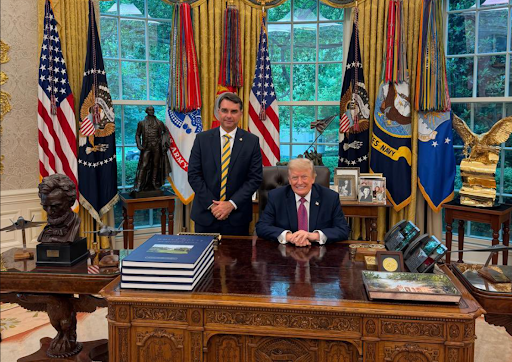

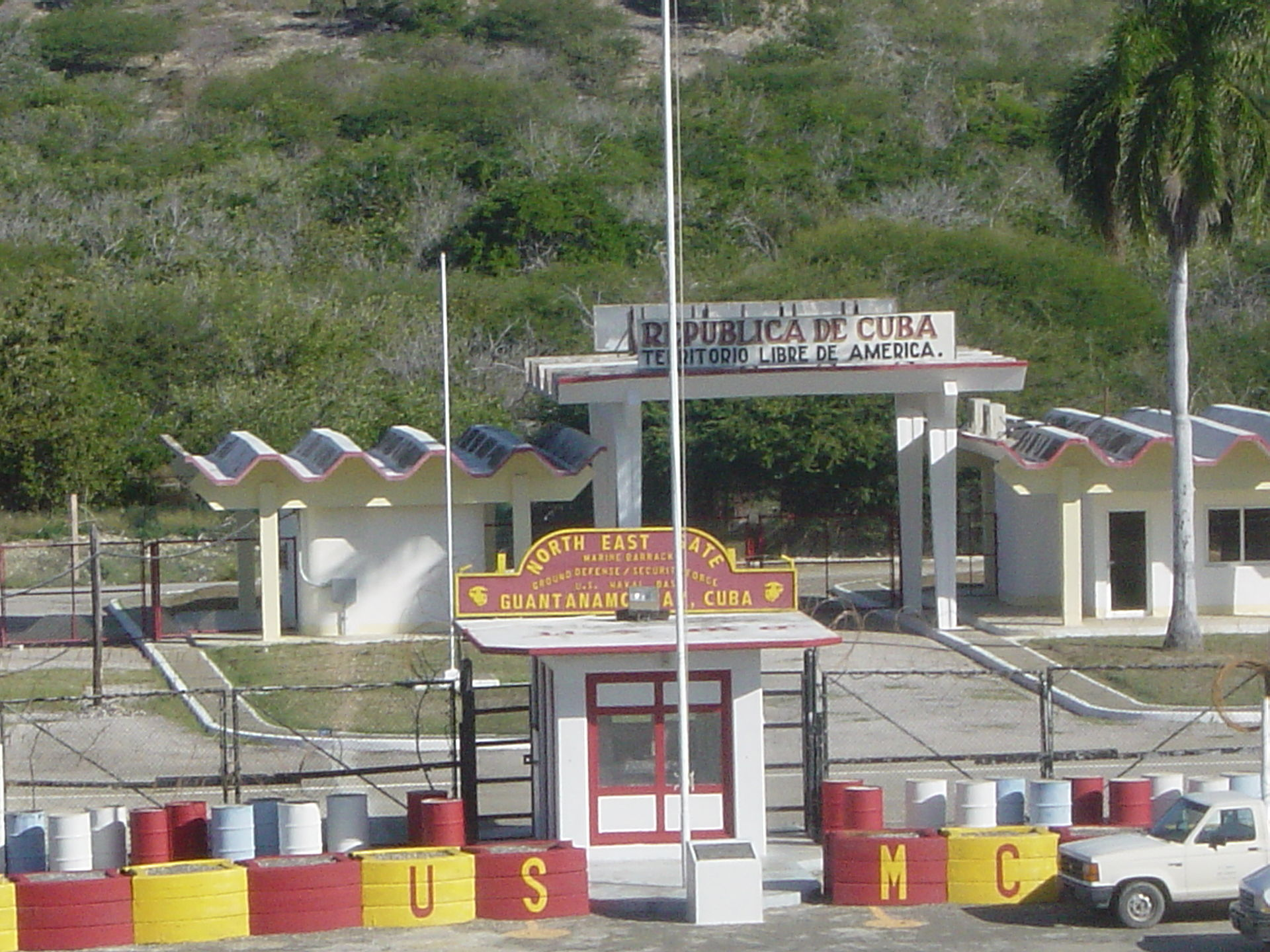
United States Secretary of Defense Pete Hegseth visited the Guantanamo Bay military base, which is located on Cuba’s southeastern coast, yesterday.
Hegseth, who holds the secondary title of Secretary of War, met with U.S. troops stationed at the base and, while there, warned Cuba against acquiring military arms that could threaten either the naval facility or the U.S. mainland.
Hegseth’s visit to the territory, which Cuba has long demanded that Washington return, is likely to be provocative, especially since the U.S. official called Cuba a national security threat as recently as May.
Havana and Washington have been at loggerheads for months, as the White House has steadily ramped up political pressure on the island since its operation to capture former Venezuelan President and longtime Cuban ally Nicolás Maduro in January.
Recently, Cuba’s political leadership in particular has been subject to increasingly punitive measures by the Trump administration.
Last week, the U.S. announced sanctions against various prominent Cuban political figures, including Cuban President Miguel Díaz-Canel and the son and grandson of former President and revolutionary leader Raúl Castro.
U.S. authorities also indicted the aging Castro in late May because of his alleged role in the downing of two humanitarian planes in 1996.
In response to the indictment and the sanctions, Cuba’s top diplomat in the United States – Ambassador Lianys Torres Rivera – accused the North American superpower of creating a “pretext” for a military intervention on the island.
The Guantanamo Bay naval base, which was leased to the U.S. as part of a treaty between the two countries in 1903, would likely become a key battleground if the U.S. decided on such military intervention in Cuba.
Hegseth’s warnings to the Cuban government about the dangers of attacking the base are likely a response to an Axios report last month which revealed that the Cuban military had acquired over 300 drones and was considering using them to attack Guantanamo, U.S. military vessels and potentially even Key West in Florida.
Jonathan Hansen, a historian and Senior Lecturer on Social Studies at Harvard University who has written extensively about Guantanamo Bay and its history, spoke to Latin America Reports about both the importance of Hegseth’s visit to the military base and the installation’s wider relevance in current and historic U.S.-Cuba relations.
“Hegseth’s trip to the U.S. naval base was meant to keep Cuba guessing and on high alert … [and] see how useful the base might be – and how vulnerable it would be – should the U.S. and Cuba go to war,” Hansen argued.
Guantanamo “would be very vulnerable, even given the degraded state of Cuba’s military these last thirty-odd years since the end of the Cold War. The base is surrounded by Cuban highground, and one can imagine Cuban drones having a field day attacking the base from the air,” the historian continued.
According to Hansen, this weakness, combined with the comparative greater proximity of U.S. Southern Command in Florida to important Cuban targets such as Havana, the high economic and logistical cost of supplying a base entirely on Cuban soil, and the absence of fighter jets on Guantanamo, makes the base strategically insignificant to the U.S.
Instead, the Harvard Lecturer pointed out, the base draws importance from its symbolic value.
The base is “useful symbolically to Trump and Rubio to remind Cuba that we’re not far away … Trump and Hegseth like Guantanamo because they like its reputation for toughness.”
Such a reputation stems largely from the base’s post-9/11 transformation into a detention centre for terror suspects. Prominent human rights organizations report that those suspects faced inhumane treatment and torture at the base.
Hansen also expressed hope that the reassertion of Cuban sovereignty over Guantanamo would form a part of an eventual negotiated settlement between the U.S. and Cuba, who remain engaged in negotiations despite rising tensions.
“One day, Guantanamo should be returned to Cuba. Justice and fairness and the principle of national sovereignty demand it. Cubans are as fractious a people as any. But as a good [Cuban] friend … said to me: “No matter how divided Cubans are, we agree about one thing: Guantanamo must return to Cuba.”
“That, along with an end to the embargo, would be the culmination of Cuban independence – one hundred and twenty-eight years overdue,” Hansen concluded.
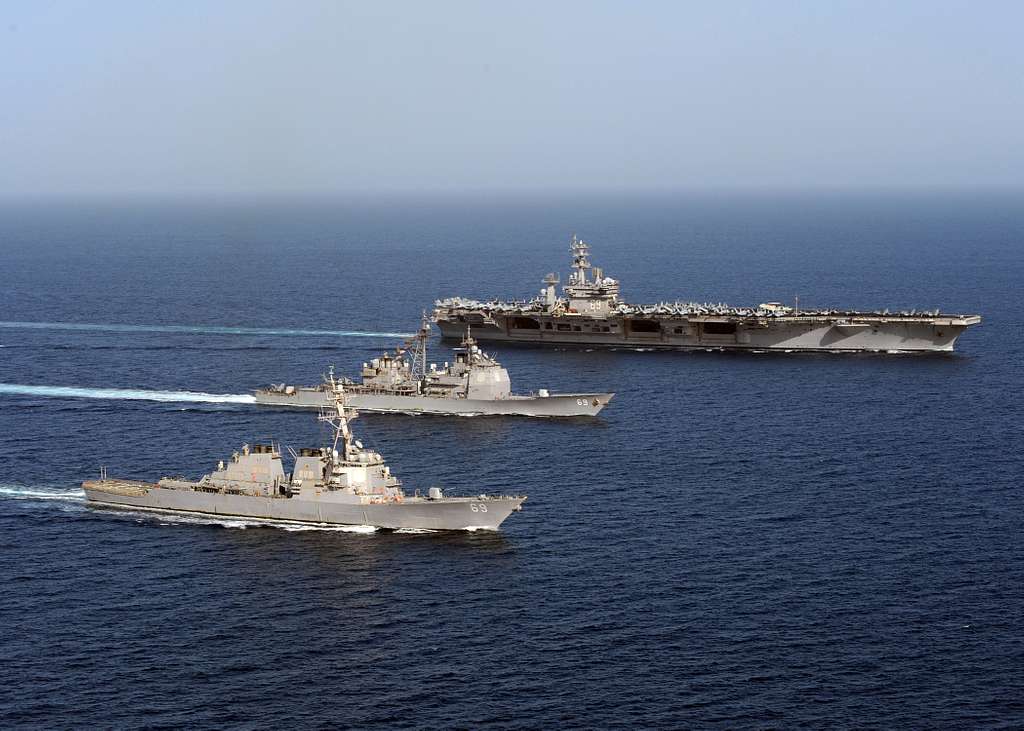
Featured Image: The Guantanamo Bay base.
Image Credit: RUSMCUSA via Wikimedia Commons
License: Creative Commons Licenses