
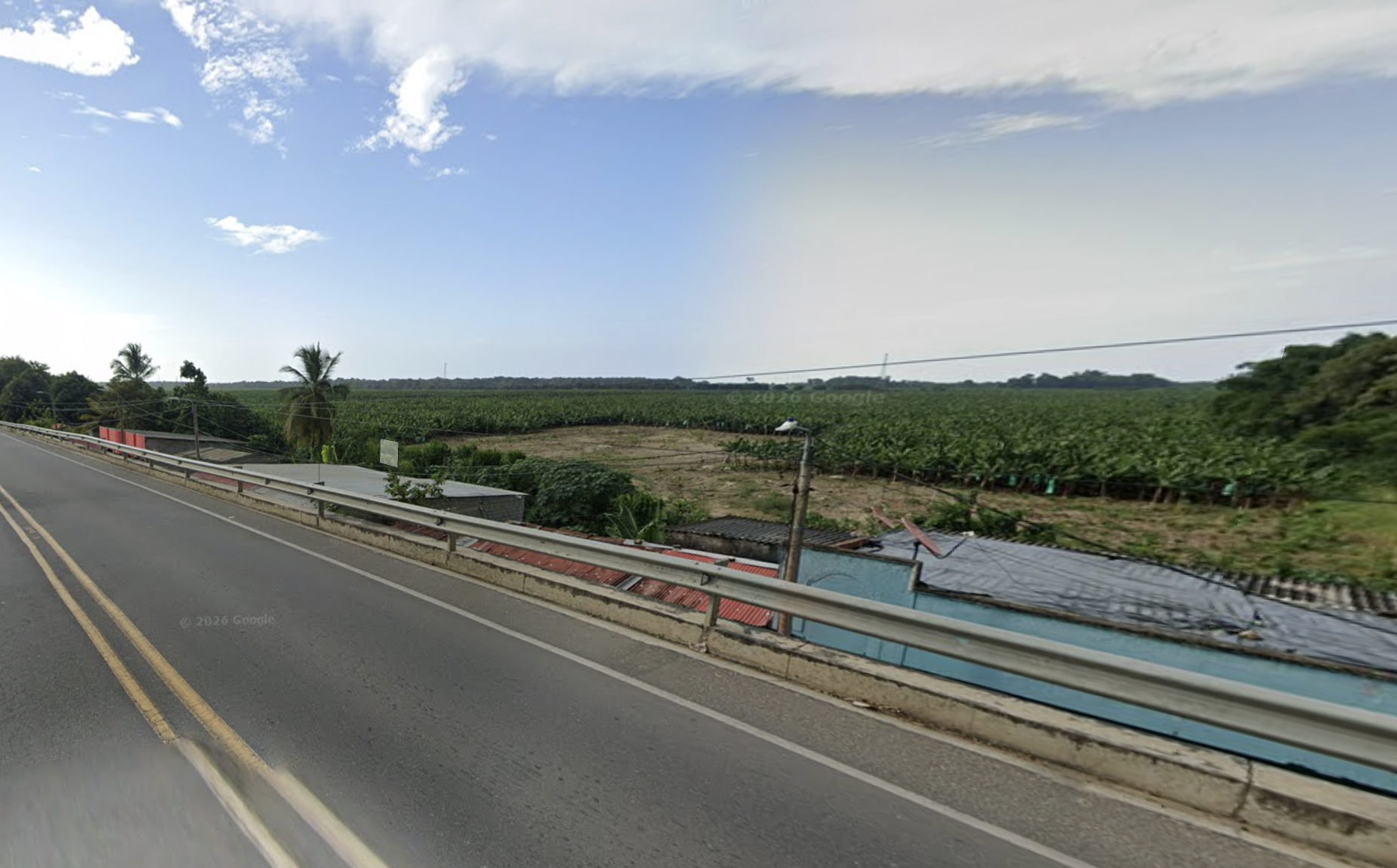

The Troncal del Caribe, a key highway on Colombia’s Caribbean coast, has been blocked since a government offensive against the Autodefensas Conquistadores de la Sierra Nevada (ACSN) armed group on Monday morning.
It is unclear whether members of the local community or the ACSN ordered the closure, which has affected a large stretch of the road between the key coastal cities of Santa Marta and Riohacha, paralyzing commuter buses, tourist transport, and freight vehicles.
Locals say Monday’s events, during which vehicles were set on fire, have created uncertainty for tourism operators and raised security concerns just days ahead of presidential elections.
The blockade began at around 9AM and has affected some 43 miles (70 kilometers) of the road, according to locals.
The area is a popular destination for foreign and domestic tourists, home to white sand beaches and the famous Tayrona National Park.
But key tourist hotspots have become inaccessible, with images shared on social media showing trees being cut down to block the road, long lines of buses, cars, and freight trucks lining the highway, and an inter-municipal bus on fire.
The ACSN, a criminal organization with ties to drug trafficking, controls much of the area surrounding Santa Marta.
Some media reports say the blockade was a protest by the group against a state military operation on Monday morning, which the ACSN condemned in a statement shared on social media: “Early this morning, we were attacked in the village of Quebrada del Sol. Even now, the fighting continues, and our troops are trying to protect their lives.”
But other reports claim residents of the Guachaca district blocked the roads to condemn the escalation in violence.
Speaking to Latin America Reports, Luis Eduardo Muñoz, a community leader from the area, described the impact of the blockade on residents.
“It’s having a big effect on the communities because the stores are closed, the roads are closed, and … it also causes a lot of anxiety for tourists who are afraid to come here, which hurts all of us,” he said.
Muñoz noted that there has been uncertainty about whether the Tayrona National Park – one of Colombia’s biggest tourist destinations – will open tomorrow. The park was forced to close earlier this year after staff reportedly received threats from armed groups in the area.
The community leader also noted that local tourism operators are worried that rising tensions will deter visitors.
“Nobody likes to be in the middle of a warzone, let alone visit one on vacation,” he said.
Muñoz criticized the government, questioning why they chose to launch the offensive against the ACSN now: “We’re outraged that [President Gustavo] Petro talks about peace… and then he starts this military incursion.”
The army said the “operation was aimed at disrupting the structures of the organized armed group Autodefensas Conquistadoras de la Sierra and curbing its criminal activities in the province.”
Security has been a key campaign issue; Petro’s chosen successor, leftist Iván Cepeda, pledges to continue negotiating with armed groups. But his rival, hard-right Abelardo de la Espriella, vows an iron fisted offensive against them.
Muñoz speculated that with the second round of presidential elections scheduled for Sunday, the offensive may be a political move: “I don’t know why he’s doing this, maybe so that his candidate wins and people can vote for him, but what he’s doing is making things worse.”
The blockade remains in effect, with the Santa Marta Mayor’s Office calling for the government to help establish a humanitarian corridor to ensure safe passage on the road.
This article was originally published on The Bogotá Post and was reposted with permission.
Featured image description: Screenshot of the Troncal del Caribe near Guachaca.
Featured image credit: Google Maps.