
Bogotá, Colombia – Colombia’s President-elect Abelardo de la Espriella on Tuesday suspended the transition process with the administration of current President Gustavo Petro.
Bitter rivals, Petro had earlier said he would not recognize the results of the June 21 run-off election in which de la Espriella eked out a win over Petro’s continuation candidate, Iván Cepeda, by a less than 1 percent margin.
“I have just instructed the vice president-elect to immediately suspend the transition process with the corrupt government that is ending its term, a government that, through its decisions and conduct, intends to destroy Colombia,” de la Espriella wrote on X.
Hours earlier, Petro repeated his claim that the election was fraudulent, without providing proof.
“Of course, my statements are serious, but they are not irresponsible; they are completely proven,” wrote Petro on X.
“The person who won the elections by popular vote was Iván Cepeda; Abelardo’s victory was achieved using algorithms from California, and those algorithms were made by private intelligence companies from Israel.”
The transition process, known as the “empalme” in Colombia, is meant for the out-going government to bring the incoming administration up to speed on national issues.
De la Espriella, who is set to take office on August 7, said Petro was planning a coup to remain in office and called on the armed forces to obey the Constitution.
“As president-elect, I ask you to fulfill your oath to protect the Constitution and democracy, and not to obey any order from Petro to the contrary,” he said.
He also hinted at persecuting his predecessor, who recently called Donald Trump to ask him to remove him and his family from the Treasury Department’s Office of Foreign Assets Control (OFAC) sanctions list.
“He knows that I will make him pay, within the framework of the law, for all his crimes; that is why they are afraid,” he said.
The U.S. has been accused of meddling in Colombia’s elections by sanctioning Petro and Trump officially endorsing de la Espriella, who resides in Miami and has styled his campaign like Trump’s.
Many in Colombia had hoped that following the elections, de la Espriella would ease his threats of prosecuting the Petro administration and take a more measured approach to governing a divided electorate.
“Far from moderating his stance after winning the presidency, de la Espriella has simply solidified his original campaign narrative, which was built entirely on framing the current president as his primary adversary,” said Gabriel Cifuentes, a political scientist and co-director at Greystone Consulting Group in Latin America.
Petro, too, is digging in his heels. He has called for mass protests on July 20 and Tuesday said he will file a lawsuit to annul the election results, citing “nonexistent votes” that were “adjusted by algorithms created by private Israeli companies.”
The current administration stated that the suspension will remain in place until “there are guarantees of mutual respect, an end to the use of expressions and actions incompatible with the institutional nature of the process.”
Cifuentes said, “This strategy goes beyond mere protest; it aims to shield the outgoing administration from scrutiny and revive the push for a constituent assembly. By destabilizing the new government, the opposition is already positioning the Pacto Histórico [Historic Pact political party] as the leading force for the upcoming regional elections.”
For some analysts, the increased tension between the two camps is worrying.
“The lack of willingness to engage in dialogue from both leaders is highly damaging; each is retreating further into their own corners,” said Gabriel Clavijo, a political scientist and expert in international relations.
“Without mutual recognition, an institutional vacuum is created that makes true governance for the country impossible.”
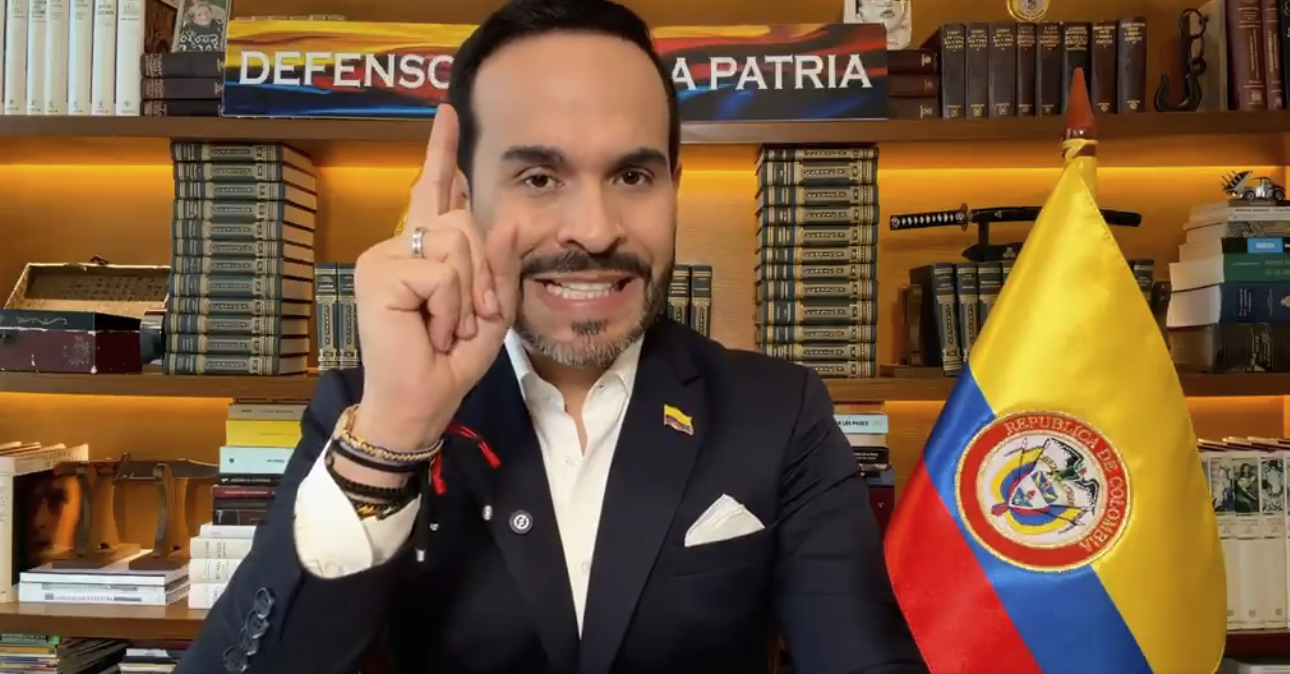
Featured image: Screenshot of video posted by Abelardo de la Espriella on July 5 in which he discusses combatting “civil disobedience” in Colombia.
Image credit: Abelardo de la Espriella via X.