
Caracas, Venezuela – As Venezuela prepares for a second round of negotiations between the government and part of the opposition in September, civil society is pushing for a wider range of issues to be addressed.
The Washington-backed negotiations are focused on the country’s stabilization, economic recovery and transition and come just months after Nicolás Maduro was captured by U.S. forces and transferred to a jail in New York in January 2026.
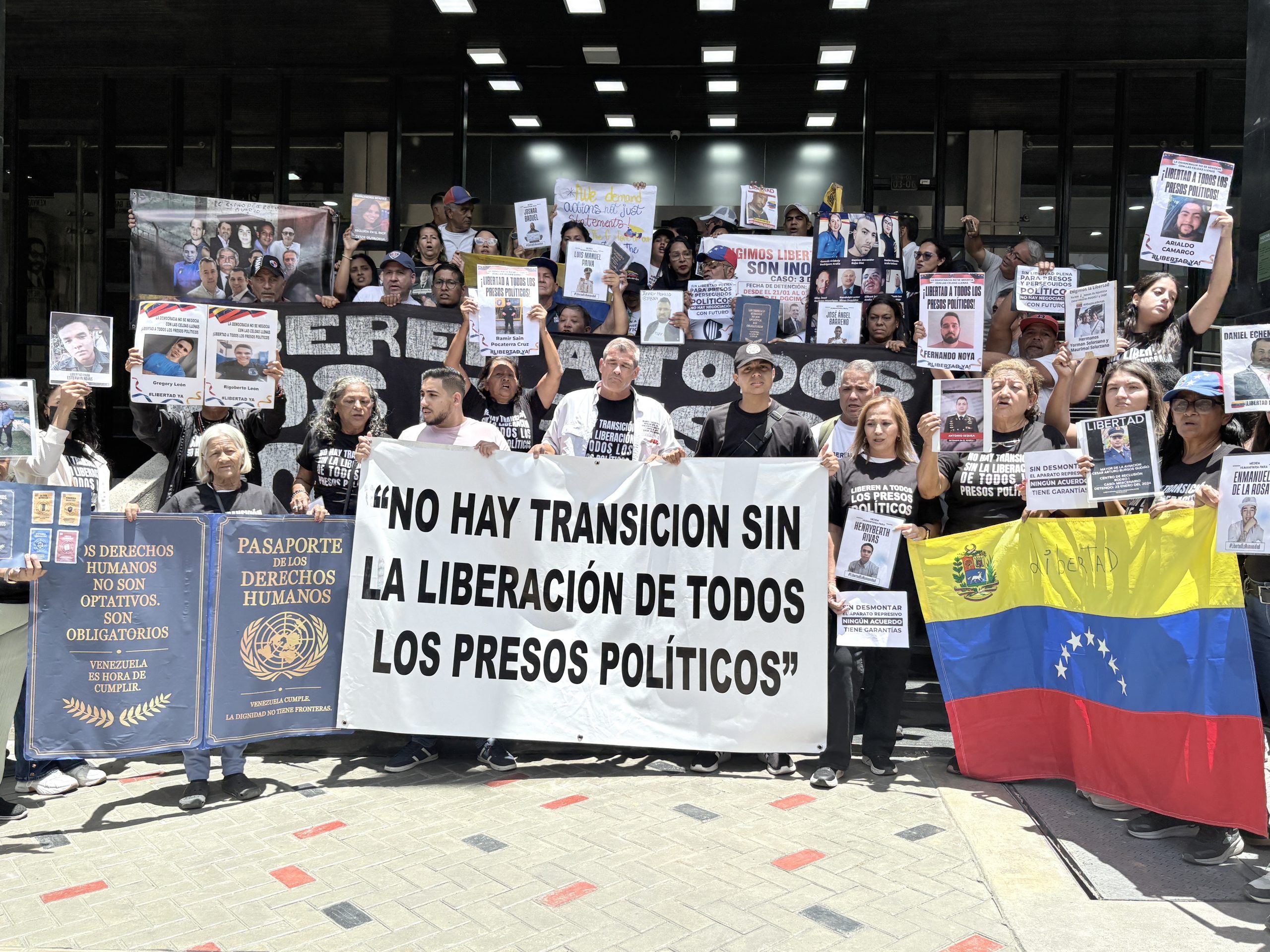
While an agenda has been set out for the talks due to last several rounds, including reforms to state institutions and measures intended to lay the groundwork for future democratic elections, protests have intensified in recent weeks demanding the issues of political prisoners, low public sector wages, and poor pensions be put on the agenda.
The gold issue
The first round of talks in August was broadly welcomed by many opposition figures and civil society groups, particularly the agreement to reform the Supreme Court, which many Venezuelans see as an important step towards making the judiciary more independent from a government with which it has long been closely aligned.
But another agreement has proved more controversial.
That was the decision to seek the return of around US$4bn in Venezuelan gold held at the Bank of England to help fund earthquake reconstruction.
The gold has been frozen in the UK for years because of a dispute over who had the authority to control Venezuela’s reserves, after Britain stopped recognising Nicolás Maduro’s regime as Venezuela’s legitimate government.
Chavistas have long demanded the gold be returned to Venezuela, while anti-government Venezuelans argue it should only be handed to a newly elected government. Many earthquake victims told Latin America Reports they share that view.
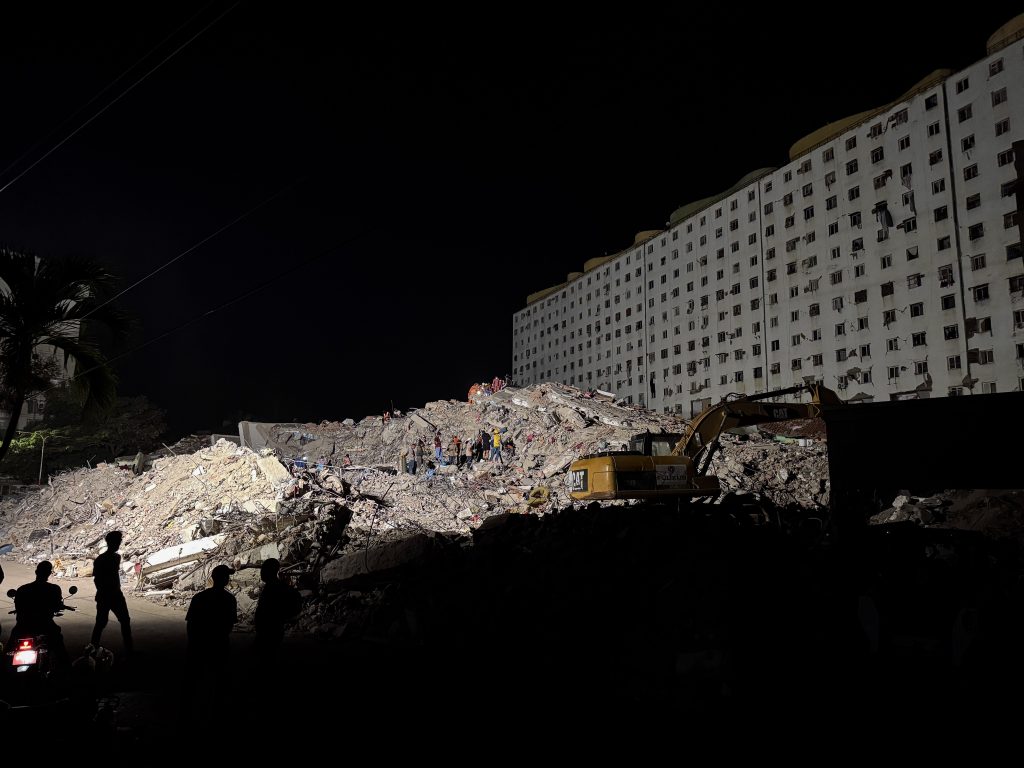
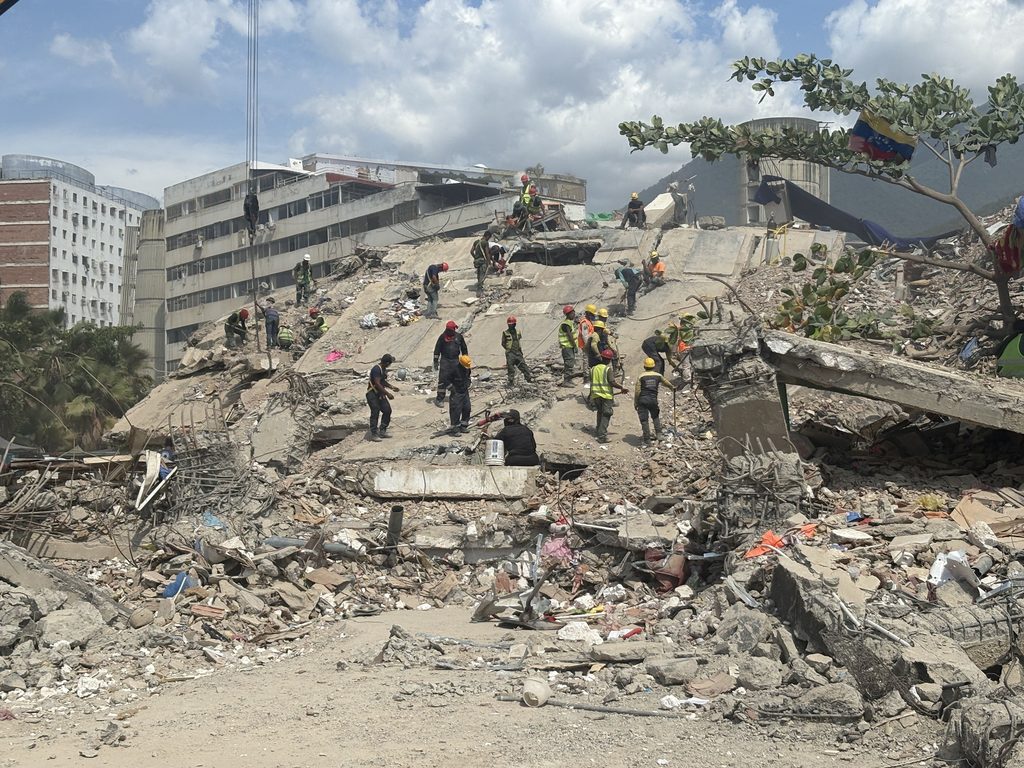
“They are using what happened here in La Guaira as an excuse to get that gold out,” said Gisela Paredes, who is still searching for her mother and son in the rubble of the public housing project OPPE 26. “Saying it is for La Guaira and reconstruction is a lie.”
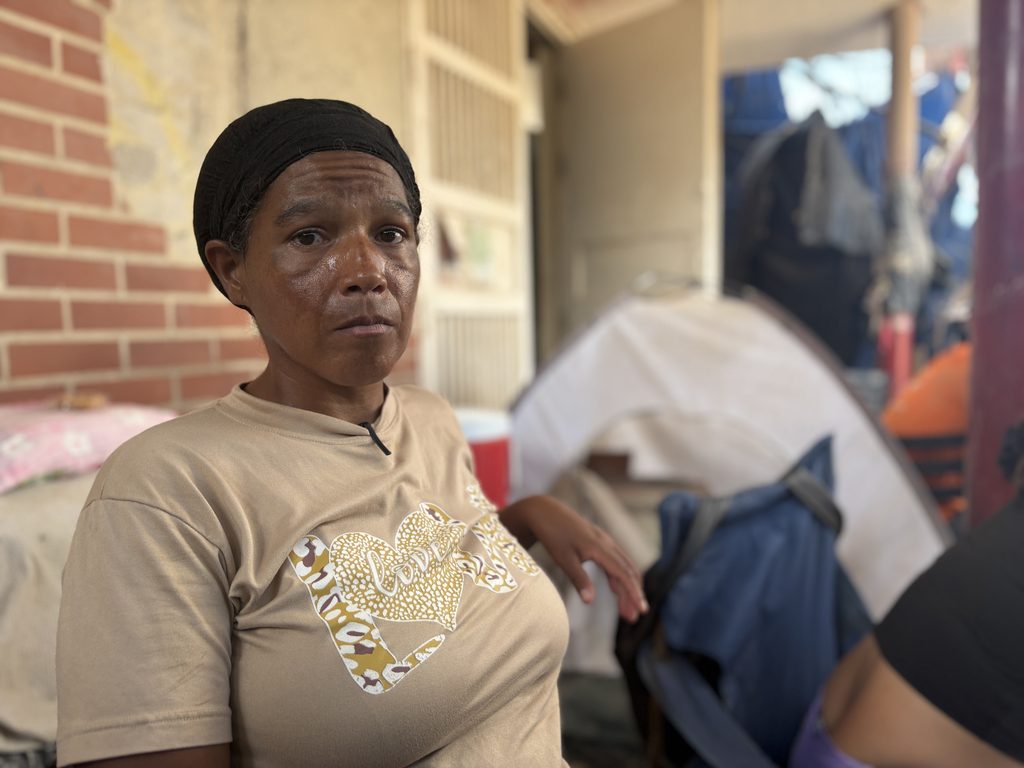
There is large distrust of the government amid much of the Venezuelan population after years of economic mismanagement, rampant corruption, a sharp decline in living standards and increased repression.
Others affected by the earthquake in La Guaira expressed similar concerns about what the government would do with the money.
“Whatever the government gets its hands on, it doesn’t pass on to the people,” said Jesus Landaeta, 70, who lost his apartment when OPPE 26 collapsed.
“Before that gold was frozen they could have and should have built housing and raised people’s wages,” he said.
The negotiations involve representatives of the government and the 2015 National Assembly, the opposition-controlled legislature that was sidelined by the government. The U.S. and much of the international community recognize it as Venezuela’s last democratically elected national institution.
Between the official rounds of talks, working groups are also discussing how humanitarian funds will reach earthquake victims.
“The central focus must be concern for assisting the victims and ensuring that the money belonging to all Venezuelans reaches the citizens to resolve their urgent problems,” Jorge Millán, a member of Venezuela’s 2015 National Assembly, said in a statement.
One proposal is to involve the private sector, allowing the funds to be audited and helping ensure they reach those in need.
Political prisoners
For families and human rights groups, the talks will also be judged by whether they address the issue of political prisoners.
There have been thousands of politically motivated detentions over more than a decade. Following Nicolás Maduro’s capture by U.S. forces in January 2026 and the subsequent passing of an amnesty law, hundreds of prisoners were released.
This issue of releasing the hundreds still in jail has not yet been announced on the agenda for talks, and protesters are demanding they are.
But there have been some positive signs.
Just two days after the first round of talks concluded, interim President Delcy Rodríguez announced a further 131 liberations in the name of “national reconciliation.” However rights groups say less than 90 have so far been freed, and many of those released are subject to continued restrictions.
For the families of those prisoners, the negotiations are a mechanism that could see more released.
“They may end up being worthwhile. There always needs to be support and pressure from us, the families, to advance the situation. That’s very important,” said Alejandra Gómez, whose husband, a former sergeant, is a political prisoner.
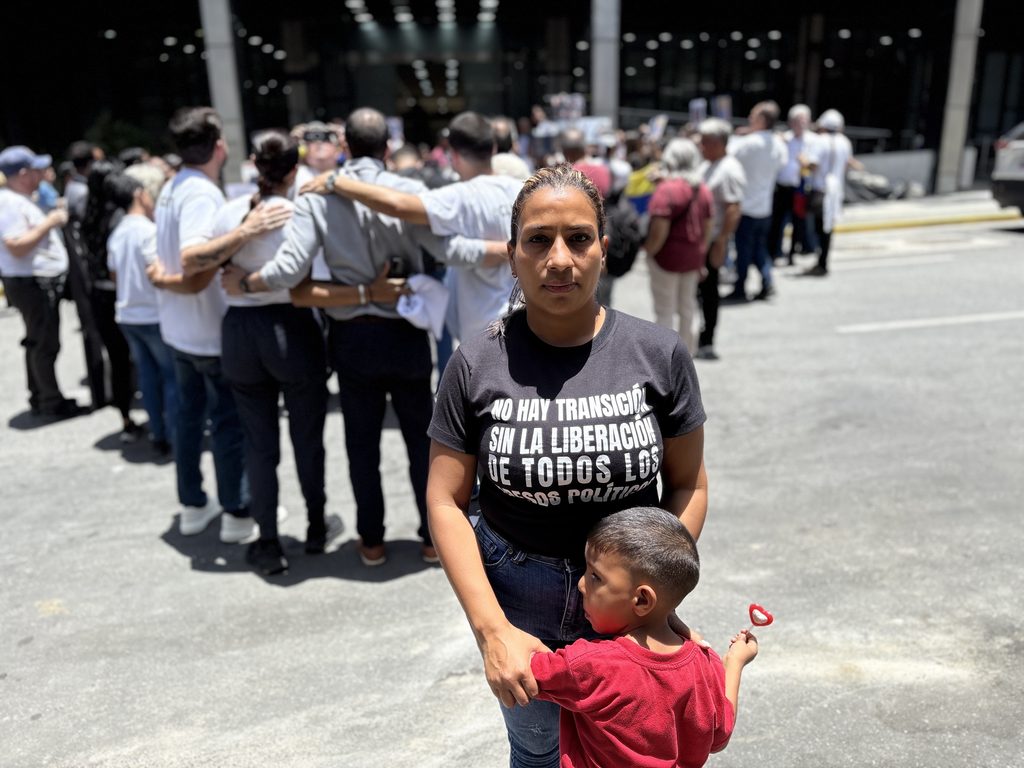
But she was disappointed her husband wasn’t released from Rodeo I prison in the latest batch of releases, and is concerned about the government’s approach.
“It’s no secret that the government plays on the exhaustion of the families of political prisoners,” she said, adding she believes they are stalling releases and using prisoners as bargaining chips.
Wages, pensions and healthcare
Workers’ and pensioners’ groups have also been calling for their concerns to be included in the talks, including demands for salaries and pensions people can live on.
The formal minimum wage for public sector workers is equivalent to around US$0.16 a month, while additional government payments are used to supplement incomes. Pensioners receive their state payments through the Sistema Patria, a government platform used to distribute some additional top up payments.
The economic situation is compounded by the deterioration of Venezuela’s public healthcare system, where shortages of medicines and medical equipment have left many older people unable to access treatment.
“With such a small pension, it is impossible to buy medicines or access private healthcare,” Urimare Capote, a representative of the Committee for the Human Rights of Pensioners and Retirees. “Many of our older adults die prematurely from age-related conditions, such as hypertension and diabetes, simply because they cannot afford their medication.”
The group says pensioners have increasingly been ignored by the authorities.
“In recent years, the governments of Maduro and Delcy Rodríguez have made pensioners and older adults invisible,” Capote said. She recently met with Dinorah Figuera, who is heading the opposition delegation in the negotiations, to voice the group’s concerns.
“We believe in peace and negotiations are a path towards it. They must be attempted as many times as necessary.”
The next round of talks will begin in September and is due to address political and civil guarantees, including the restoration of banned political parties and the political rights of opposition figures.
Featured image description: Protesters demonstrate in central Caracas saying a political transition cannot take place without the release of all political prisoners.
Featured image credit: Catherine Ellis.