
Colombian President Abelardo de la Espriella asked United States Secretary of State Marcio Rubio for help in Colombia’s post-earthquake economic recovery and in its efforts to quash narcotics trafficking on Thursday.
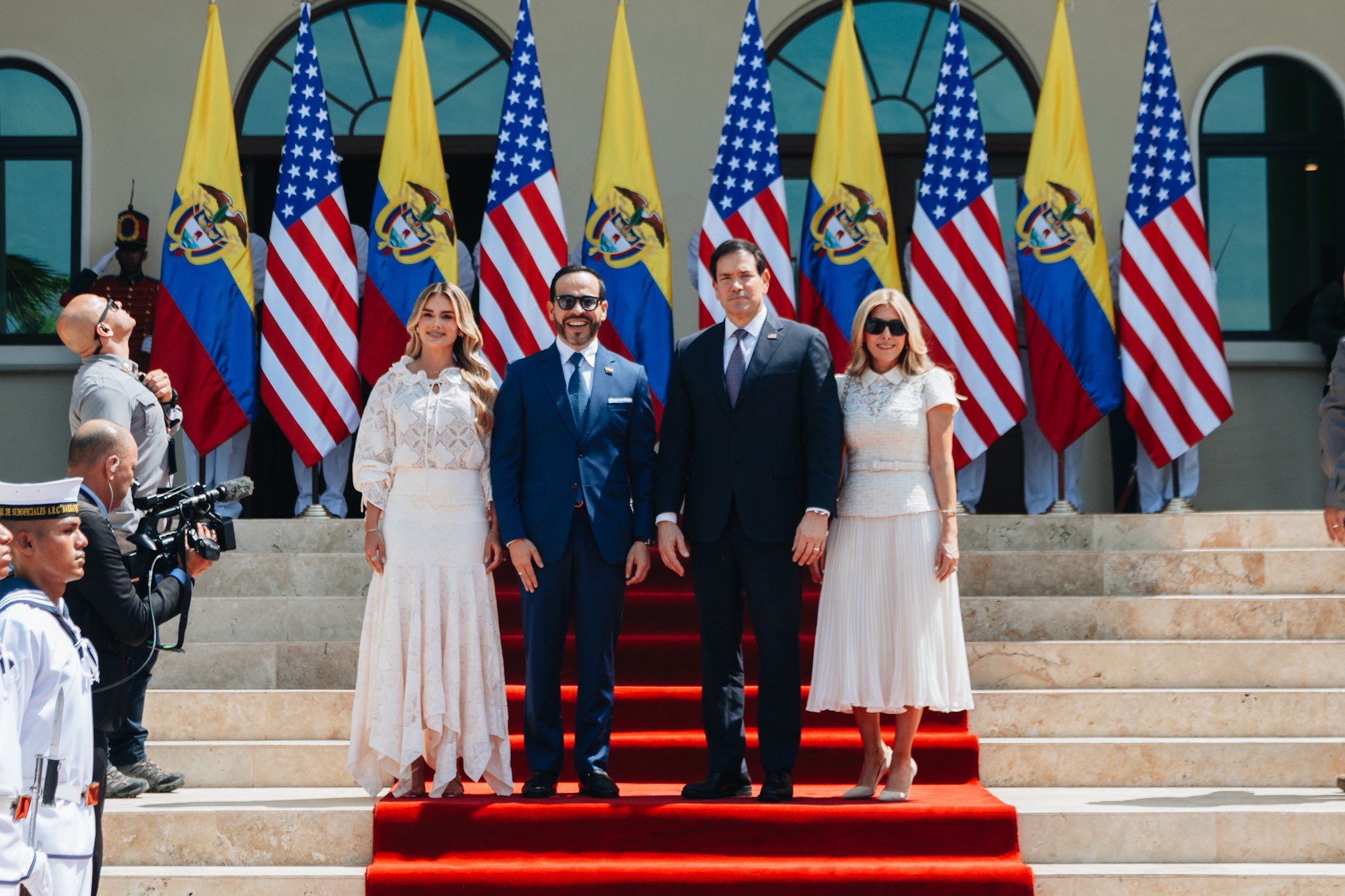
Rubio visited Colombia for the first time since de la Espriella’s election, fortifying the foundation of what is expected to be a close relationship between the two countries under their respective right-wing leaders.
De la Espriella and Rubio discussed their “shared agenda” on security and economic development, according to the Colombian president.
“This high-level meeting confirms, through concrete actions and unwavering determination, that the strategic alliance between Colombia and the United States is stronger than ever,” de la Espriella wrote on X.
Rubio’s stop in Barranquilla was the first on a broader tour of South America, where the U.S. has increasingly aimed to regain influence and power under President Donald Trump.
In Colombia, the Trump administration sees a key partner in its fight against what it describes as “narcoterrorism.” Rubio described security as the principal obligation of any government to its people, and praised de la Espriella for taking it seriously.
“We’re going to do everything we can to help you,” Rubio said following Thursday’s meeting, without delving into specifics.
When asked by reporters at a press conference if that help would include the opening of a United States military base on Colombian soil, Rubio said Colombia would have to ask the United States to do so.
Trump has established the “Shield of Americas” alliance of Latin American countries that aims to combat drug trafficking and organized crime through intelligence sharing and military action. Colombia was not invited to participate under former leftwing president Gustavo Petro, but joined the alliance immediately under de la Espriella.
The Trump administration announced it would invest $1 billion in Colombia’s security efforts the day de la Espriella took office in August, and de la Espriella said Thursday that he’s looking for U.S. help in modernizing equipment like military drones and helicopters “to address increasingly sophisticated threats.”
“Colombia wants to reestablish itself as the United States’ primary partner in hemispheric security, and we will be the leading partners in South America,” de la Espriella said following the meeting.
Rubio described Petro’s four years in office as damaging to the relationship between the U.S. and Colombia.
“This is the natural state of things, for the U.S. and Colombia to be strong allies and strong partners,” Rubio said. “The last four years is an aberration between our governments, but that is changing as well.”
De la Espriella shares the Trump administration’s firm-handed approach to organized crime and immigration enforcement, but also sees the United States as an important player in the nation’s recovery from an Aug. 10 earthquake that caused an estimated $13.2 billion in damage.
The Colombian president has asked the Trump administration to ease a 12.5% tariff that the United States imposed in July. He has yet to receive an answer and it was unclear to what extent the issue was discussed during Thursday’s meeting.
De la Espriella said Thursday he proposed that Colombia work with the United States on “mechanisms for cooperation, investment, and financing” to facilitate Colombia’s economic recovery.
“We are proposing a partnership with the United States in which Colombia contributes projects, territory, productive capacity, resources, and clear rules, and the United States contributes investment, financing, technology, and entrepreneurial capacity,” de la Espriella said.
The two countries did announce two memorandums on Thursday, one related to sustaining the chain of supplies for materials mined in Colombia and the second about cooperation on nuclear issues.
Trump strongly backed the upstart presidential campaign of de la Espriella, who had never before held elected office and in recent years had worked as a criminal defense attorney in the United States, where he obtained citizenship.
In addition to Colombia, Rubio will head to Ecuador and Peru, all of which have elected right-wing leaders more friendly to the Trump administration within the last two years. Rubio described the three countries as “strongly aligned with the United States” in confronting transnational criminal organizations and in economic trade.
“It’s part of a trend that you’re seeing in the Western Hemisphere of alignment with U.S. and U.S. interests,” said Rubio, who added the Trump administration hopes to secure trade deals with all three countries he’s visiting.
Under Trump, the United States has followed what the president has referred to as the “Donroe Doctrine,” a reference to the 19th century “Monroe Doctrine” policy of insulating the Americas from European influence. Now, Trump is trying to shield Latin America from adversaries like Russia and China.
Absent from Rubio’s South American itinerary is Venezuela, where Trump recently announced a major agreement that would permit United States investment in Venezuelan oil production. The deal comes just months after the United States captured and removed Venezuelan President Nicolás Maduro.
Rubio explained that Venezuela’s omission on the trip was due to time constraints; Monday was a federal holiday in the United States and Friday is the anniversary of the Sept. 11, 2001 terrorist attacks.
“We’ll get there eventually,” Rubio said of Venezuela.
Featured image description: Abelardo de la Espriella received Marco Rubio in Barranquilla on Tuesday.
Featured image credit: @ABDELAESPRIELLA via X.