
Last week, Nicaragua announced its withdrawal from the Central American Parliament (PARLACEN), invoking national sovereignty as its official motivation.
PARLACEN’s role is to represent the peoples of participating Central American countries, provide a permanent forum for political dialogue, and promote regional integration, democracy, peace and human rights.
The announcement follows renewed regional pressure over Nicaragua’s political and human-rights situation after foreign ministers from across the region met at the Organization of American States (OAS) to discuss the Central American nation on October 2.
Nicaragua has not given a detailed reason for leaving PARLACEN. In the October 3 letter, its Foreign Ministry said only that it was denouncing the parliament’s founding treaty “in full exercise of its sovereignty”, with immediate effect.
The timing, however, places the decision within a wider confrontation between Managua and international bodies over democracy and human rights.
A day earlier, OAS members unanimously called on Nicaragua to release political prisoners, disclose the whereabouts of people subjected to enforced disappearance, restore civil liberties and political pluralism, and create conditions for free and fair elections. The OAS also established a ministerial follow-up mechanism to pursue diplomatic engagement, assess Nicaragua’s progress and consider further diplomatic and legal action.
The declarations were made during a Meeting of Consultation of Foreign Affairs, one of OAS’ mechanisms for dealing collectively with an urgent regional matter; the organization said recent developments in Nicaragua constitute “an urgent matter of common interest to the American states.”
Headquartered in Guatemala City, PARLACEN was founded as part of the Esquipulas Peace Process in the 1980s when Central America was engulfed by civil wars and Cold War tensions, particularly in Guatemala, El Salvador, and Nicaragua, raising fears of a wider regional conflict.
However, the parliament has faced criticism for its limited legislative powers, considerable operating costs and the parliamentary immunity conferred upon its members. Its critics, including Salvadoran lawmakers, have also argued that the body produces few tangible results and has provided a refuge for former politicians accused of corruption in their home countries.
Nicaragua is not the first country to want to withdraw from PARLACEN. In 2009, Panama tried to leave after describing the institution as ineffective, but its attempt was blocked. El Salvador moved to leave last year, arguing that PARLACEN’s decisions had little practical impact and that membership cost the country around US$1.7 million each year.
The latest dispute has deeper roots in Nicaragua’s political crisis since 2018, when anti-government protests were violently suppressed. Ortega’s government has since increasingly distanced itself from institutions scrutinising its record, leaving the OAS in 2023 and announcing its withdrawal from the UN Human Rights Council in 2025.
Whether Nicaragua can leave immediately is not settled. PARLACEN is analysing Managua’s announcement, while experts note that its founding treaty contains no explicit withdrawal clause, meaning the dispute could move into questions of diplomacy and international law.
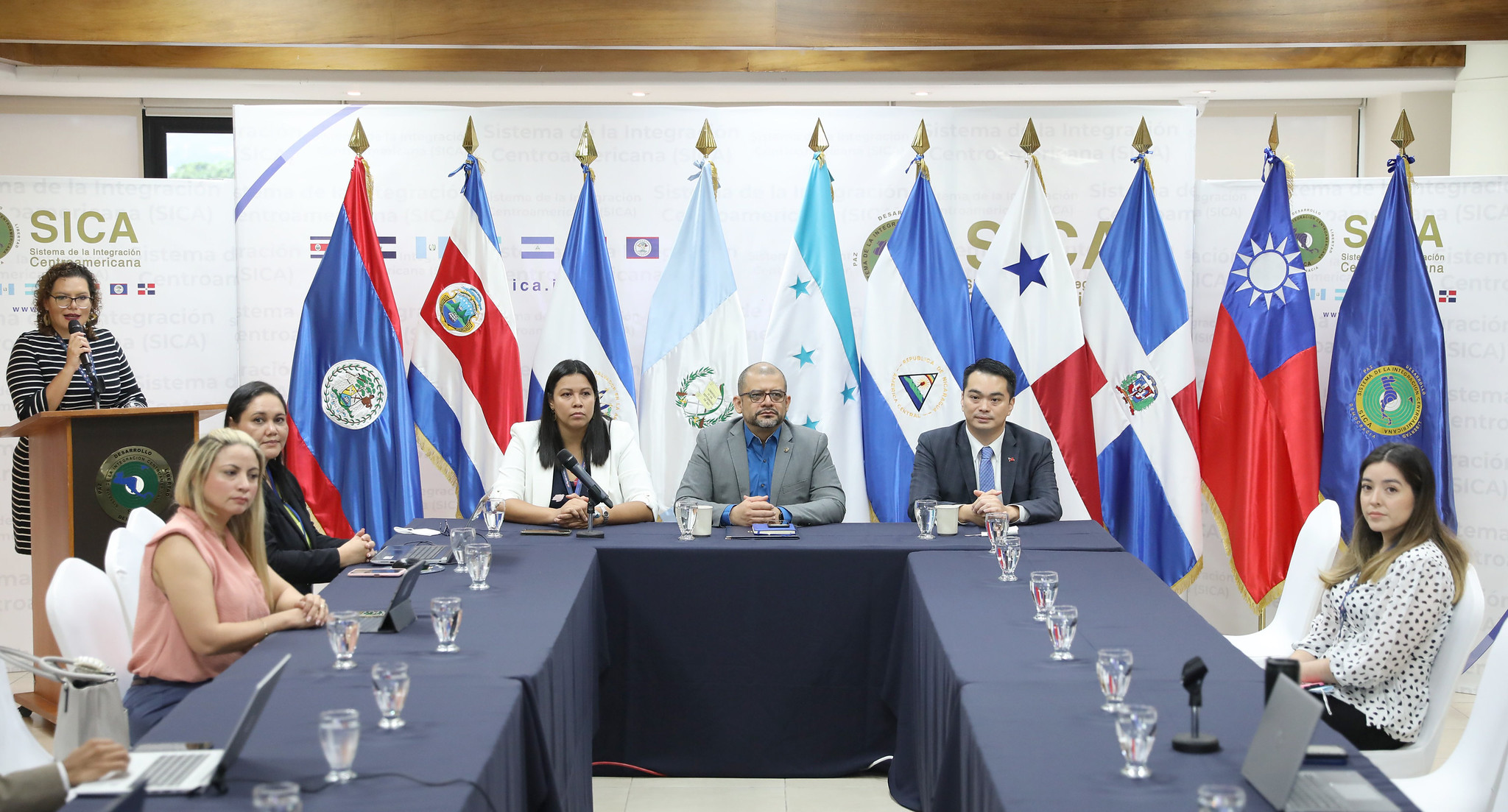
Featured image description: Event Featuring SICA Secretary General Werner Vargas and Representatives of the Regional Tourism Policy (PRETUR).
Featured image credit: Secretaría General del SICA via Flickr