
The deployment of some 2,500 Salvadoran troops to Haiti is complicating an already difficult peacekeeping operation and sets a worrying precedent for future regional security operations, say experts.
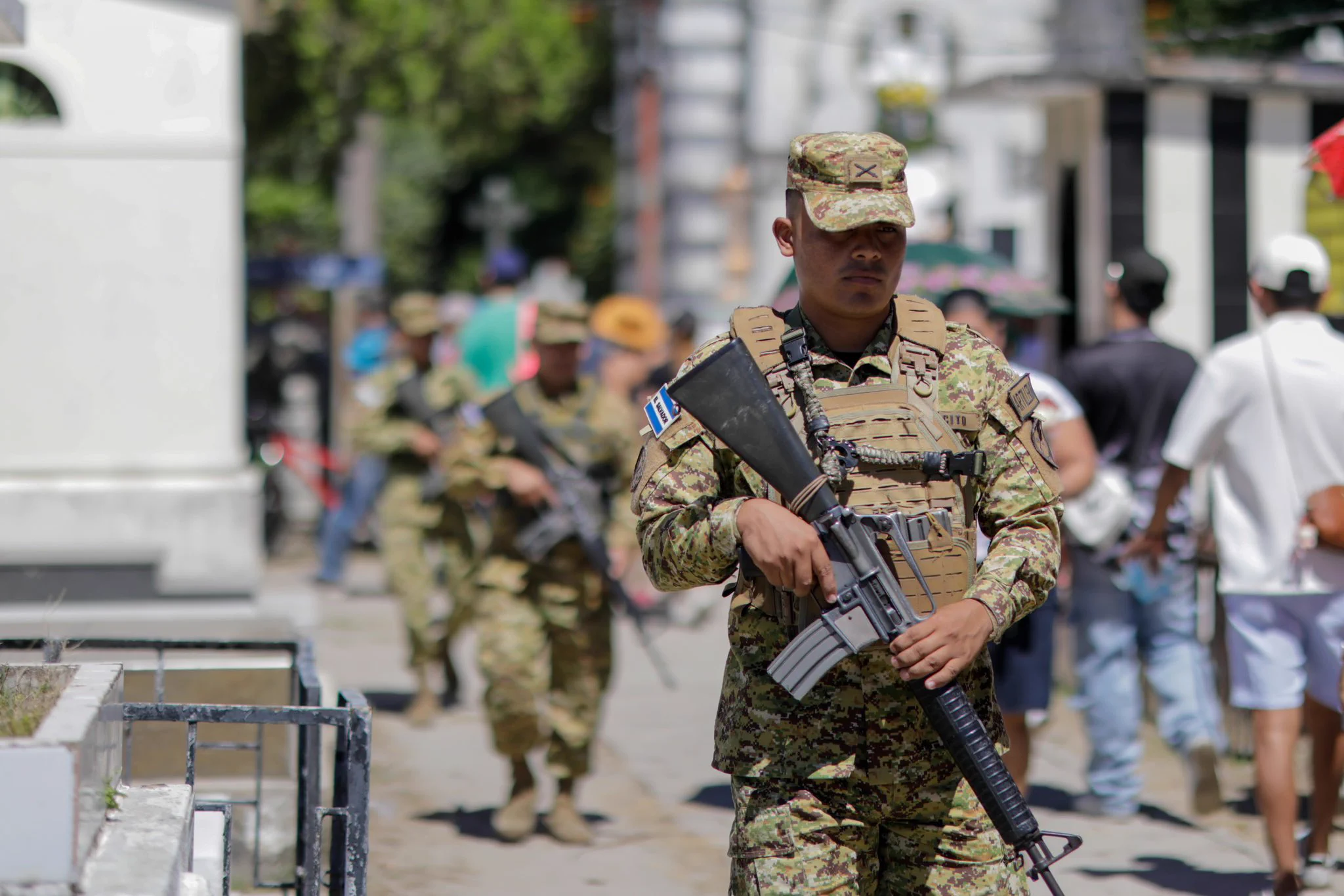
Salvadoran President Nayib Bukele deployed the forces in late October to combat gangs in Haiti after four Salvadoran aviation technicians disappeared following an ambush.
Bukele and Haitian Prime Minister Alix Didier Fils-Aimé signed a bilateral agreement for Salvadoran forces to carry out joint operations with the Haitian National Police and a task force of foreign contractors, which analysts warn could complicate existing peacekeeping operations by the UN-backed Gang Suppression Force (GSF).
Ambiguous objectives
The Salvadoran deployment was first presented as a rescue operation for the four Salvadoran aviation technicians serving with the GSF, but the mission’s scope seems to have broadened.
In a November 3 post on X, Bukele promised to help Haitians “take back the country” from gangs, invoking the spirit of Haitian independence leader Jean-Jacques Dessalines. Officially, though, the deployment is still being touted as a rescue operation, with Salvadoran Security Minister Gustavo Villatoro assuring on Monday that the troops would leave as soon as the men were found.
But the troops’ movements tell a different story, says the International Crisis Group’s (ICG) Haiti analyst Diego Da Rin. The four technicians were ambushed in Croix-des-Bouquets, on the northeastern outskirts of Port-au-Prince, but Salvadoran forces have since set up a base at the Stade Sylvio Cator, on the opposite side of the capital, and appear to be preparing a raid on the Village de Dieu gang. Da Rin says the geographic shift “may reveal that the operation has different objectives.”
Demonstrations of support, from a soccer stadium in Miami to the streets of Port-au-Prince, suggest the Salvadoran mission has been well received by many Haitians.
But Da Rin believes the November 6 demonstrations in support of Bukele were less spontaneous than they looked, describing a “preparation for these demonstrations the day before.” Samuel Joasil, a police officer who leads what Da Rin called “arguably the most powerful vigilante brigade in the capital,” had been calling on people to show Bukele their support.
A new security model
Despite El Salvador already contributing troops to the GSF, including the four missing technicians, Bukele intentionally chose to deploy his own, larger force outside its framework.
Renata Segura, Program Director for Latin America and the Caribbean at ICG, says this is unfortunate for two reasons: “On the one hand, it signals some kind of distrust or unwillingness to go through UN channels.”
On the other hand, it allows Bukele – who has been trying to export a security model that reduced violence in El Salvador at great expense to human rights, democracy and civil rights – to do things his own way.
“When organizations like the UN come in on the ground, they have very strict protocols. Those protocols get broken, but there are still very clear rules of engagement, which is something we haven’t seen with El Salvador,” said Segura.
With Salvadoran troops and Vectus Global both operating outside the UN-backed GSF, analysts are asking whether Haiti has become a testing ground for a new model of security intervention in the region. Segura called this the “million-dollar question,” agreeing it sets a “worrisome” precedent.
That precedent is especially dangerous, Segura added, because collateral damage and the protection of civilians aren’t as high on the agenda for Bukele as they are for bodies like the UN.
The risk to civilians
On November 9, Prime Minister Fils-Aimé set up a “coordination cell” to organize operations and prevent overlap between security forces, however details have not been released.
Whatever arrangements exist between Haiti and El Salvador, Da Rin said, they’re unlikely ever to be made public. “We don’t know how to hold accountable the different forces operating under different mandates, or how civilians could seek accountability for damage inflicted on them, especially if operations get murkier than they’ve been until now,” he told Latin America Reports.
So far, the toll has been lower than some feared. People running health institutions in the areas where security forces have been operating told ICG that civilian casualties have risen, but not as much as expected for such ambitious operations, suggesting civilian protection has been prioritized so far.
But the Salvadorans’ strategy so far, which has seen quick wins without a sustainable strategy to maintain territorial control, carries a particular risk to civilians.
In Croix-des-Bouquets, where forces destroyed 400 Mawozo gang leader Lanmò Sanjou’s compound over a week ago, security forces didn’t establish a lasting presence, according to Da Rin. He said that armed groups have since returned, searching residents’ phones and threatening people suspected of sharing information with security forces.
“The gangs come back and kill people for their alleged collaboration with security forces,” the analyst said. “That further undermines residents’ trust in state security forces in these gang-controlled areas, where security forces are often seen more as a threat than as protection.”
Divisions within Washington
In October, Bukele called President Donald Trump to get his approval for the operation, and Trump reportedly told him, “Do what you have to do,” Axios reported.
However, Segura notes that U.S. Secretary of State Marco Rubio was “very unhappy” with El Salvador’s improvised deployment, and Axios reported that he wanted to keep Haiti off the radar. Furthermore, members of the Trump administration have been key organizers and proponents of the GSF.
But the Trump administration’s skepticism of the United Nations and international governance more broadly, combined with what Segura notes as an affinity for the privatization of security, could make the bilateral arrangement an attractive alternative, with “less bureaucracy, less procedure,” that’s easier for the U.S. to back.
Featured image description: Salvadoran soldiers on patrol.
Featured image credit: @FUERZARMADASV via X.