
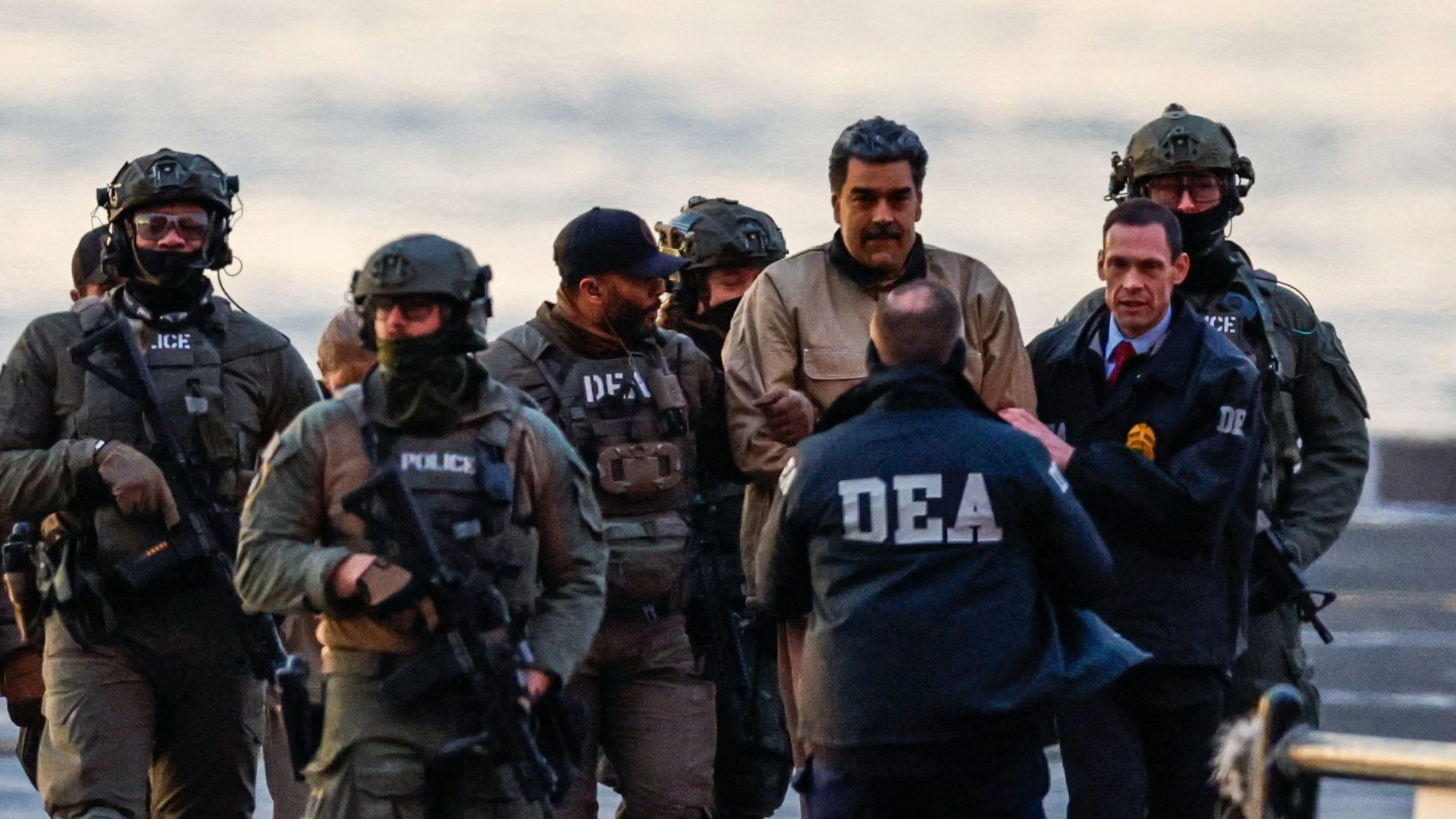
Santiago, Chile – Disgraced Venezuelan President Nicolás Maduro pleaded not guilty to all federal charges against him in the Southern District Court of New York, just 48 hours after the U.S. military operation that culminated in his capture in Caracas.
Read more: Maduro captured after U.S. launches airstrikes on Caracas
In a hearing fraught with media tension and guarded under extreme security measures, Maduro told the judge: “I am a prisoner of war […] I am not guilty, I am a decent man, I am still the president of Venezuela.”
The proceedings took less than an hour, and were presided over by 92-year-old judge Alvin K. Hellerstein, a veteran known for his handling of high-profile cases.
Maduro’s defense team, led by attorney Barry Pollack, former president of the National Association of Criminal Defense Lawyers and a specialist in financial crimes, corruption, and national security, confirmed in court that it would not be requesting bail at this time.
Pollack argued that “he is the head of a sovereign state and is entitled to privilege.” His main strategy at the hearing was questioning the legality of the arrest.
The prosecution charged Maduro with four federal counts, including conspiracy to commit narco terrorism; leading the “Cartel of the Suns” to flood the US with cocaine as a political weapon; conspiracy to import cocaine; and possession of weapons of war and destructive devices.
These crimes carry a mandatory minimum sentence of 20 years and a maximum of life in prison. Maduro’s wife and First Lady of Venezuela, Cilia Flores, appeared alongside him dressed in prison uniform. She also pleaded not guilty to the charges of conspiracy and racketeering.
Hellerstein dismissed the initial prisoner of war status claims, ordered both individuals to be held in a Brooklyn federal prison, and set the next hearing for March 17, 2026. This period of more than two months was granted to allow for the investigation of evidence and collection of testimonies.
Simultaneous with the trial, the Venezuelan regime carried out an immediate reorganization of command. Vice President Delcy Rodríguez, was sworn in as interim president, while her brother, Jorge Rodríguez, was re-elected as president of the National Assembly.
In his first official act following Maduro’s arrest, Rodríguez promised to use all possible procedures to secure Maduro’s safe return to Venezuela, establishing a line of resistance against Washington.
U.S. President Donald Trump responded to the restructuring of the Chavista regime with a direct threat, warning that if the new authorities do not behave, Interim President Rodríguez could face harsher consequences than Maduro.
Expectations about the fate of the Venezuelan leader have generated intense global debate. The postponement of the trial until March and the appointment of the Rodríguez siblings leave many questions about Venezuela’s fate.
Trump, however, has vowed to take control of Venezuela until the country is stabilized. But, how he will do so, who will be in charge, and how long the operation will last are the new unknowns surrounding this historic process.
Featured image: Nicolás Maduro on his way to court
Source: Heute.at
License: Creative Commons Licenses