
Rising bilateral tensions between the U.S. and Cuba repeatedly played out on the international stage during last week’s meeting of world leaders at the United Nations General Assembly (UNGA) in New York.
On Tuesday, the Cuban delegation to the UN walked out during U.S. President Donald Trump’s address to UNGA in apparent protest against what he said about Cuba.
Relations between the two nations have been increasingly tense this year as the White House has ramped up pressure on the ruling Cuban Communist Party through fresh sanctions, indictments, and a fuel blockade.
Tensions began to flare at the UNGA after Trump slammed Cuba’s government.
“My administration is also seeking a fundamental change in the situation in Cuba, where the communist regime is under great pressure, the biggest pressure they’ve ever been under. It’s an absolutely failed state. It’s failing like never before, and it will fall,” the U.S. leader claimed in his speech, prompting the Cuban delegation to walk out.
While there have been reports that the U.S. military is preparing for a potential military operation against Cuba in the near future, Trump said on Saturday he didn’t think force would be necessary: “I don’t think we’ll need the military. Cuba is failing very badly, we want to help Cuba. We want to open Cuba up to our people.”
Trump also suggested in his UNGA speech that negotiation remained an option: “[Secretary of State] Marco Rubio is handling a negotiation. He’s deep into negotiations with Cuba. Let’s see what happens”.
But his remarks directly contradicted Cuban Foreign Minister Bruno Rodríguez Parrilla, who claimed earlier this month that negotiations between the two adversaries had ceased.
The Cuban response
Rodríguez Parrilla gave his address to UNGA on Saturday, with much of his speech dedicated to attacking U.S. policy towards Cuba.
“As is well known, in Cuba we are facing a multidimensional aggression from the United States government; a permanent, abusive and ruthless hostility that has lasted for almost seven decades already. Since January, 2026, this aggression has strengthened and become crueler and more dangerous.”
In January, Washington imposed a near-total fuel blockade on the island, which has deepened an existing economic crisis and triggered widespread blackouts.
In his speech, Cuba’s Foreign Minister also warned that Washington may be preparing a direct intervention in the island.
“The threat of the use of military force against Cuba persists … Should it materialize, it would be a major crime. It would cause the death of Cuban and American youths as well as huge destruction. Cuba will exercise, with utmost resolve and energy, its legitimate right to defend itself,” he said.
Other UN delegations echoed Rodríguez Parrilla’s sentiments about U.S. sanctions.
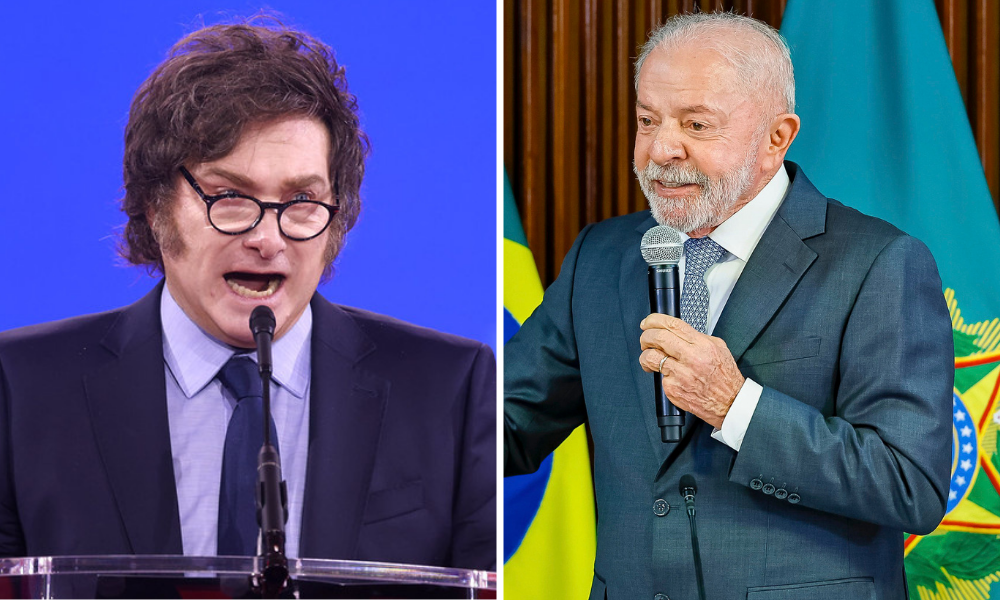
“In Cuba, the world watches in horror as collective punishment is imposed on 10 million people by an illegal economic and energy embargo,” Brazilian President Lula, who was the first world leader to speak at UNGA, told the assembly.
Numerous other delegations, including the Angolan, Vietnamese, Tanzanian, Namibian, South African, Russian and Chinese contingents, issued similar statements urging an end to coercive economic measures against Cuba.
Trump repeats justifications for potential regime change
The Trump administration has repeatedly vowed to punish Cuba politically over the course of this year by threatening the Cuban leadership with military intervention and regime change.
The justification for these threats, according to the U.S. government, is Cuban backing for far-left extremists in the U.S.
“We’ll not allow a haven for foreign adversaries to threaten America on our own doorstep … the Cuban regime has also spent decades coordinating with left-wing radicals and communist networks here in the United States,” Trump declared in his UNGA speech.
His remarks referred to a document released by the state department called “Cuba Report: The Capital of 21st Century Communism”. The document claims that Cuba is responsible for promoting subversion against the U.S. government on U.S. soil through a sympathetic network of left-wing groups.
“Communism will never be coming to America, but freedom will be coming to Cuba,” declared Trump.
The report’s critics argue that the document is being used to justify U.S. aggression towards Cuba and discredit Trump’s left-wing opponents, particularly the Democratic Socialists of America, as traitorous foreign subversives before the U.S. mid-term elections in November.
Despite these incendiary accusations by the U.S. at UNGA, some experts stress that the significance of these tense interactions between the U.S. and Cuban delegations at the UN is largely symbolic.
“UNGA speeches are all about posture rather than substance. The Cubans were bound to walk out, given Trump’s explicit threats to take over Cuba,” argued Antonio Kapcia, a professor of Latin American history at the University of Nottingham’s Center for Research on Cuba, in conversation with Latin America Reports.
Kapcia also argued that Trump’s threats at the UN do not mean that a military conflict between Cuba and the U.S. is inevitable.
“The Trump Administration has got the message that it’s a lot more difficult than either Venezuela or than they anticipated. Trump’s words sound very much like his repeated promises on Iran being on the point of defeat”.
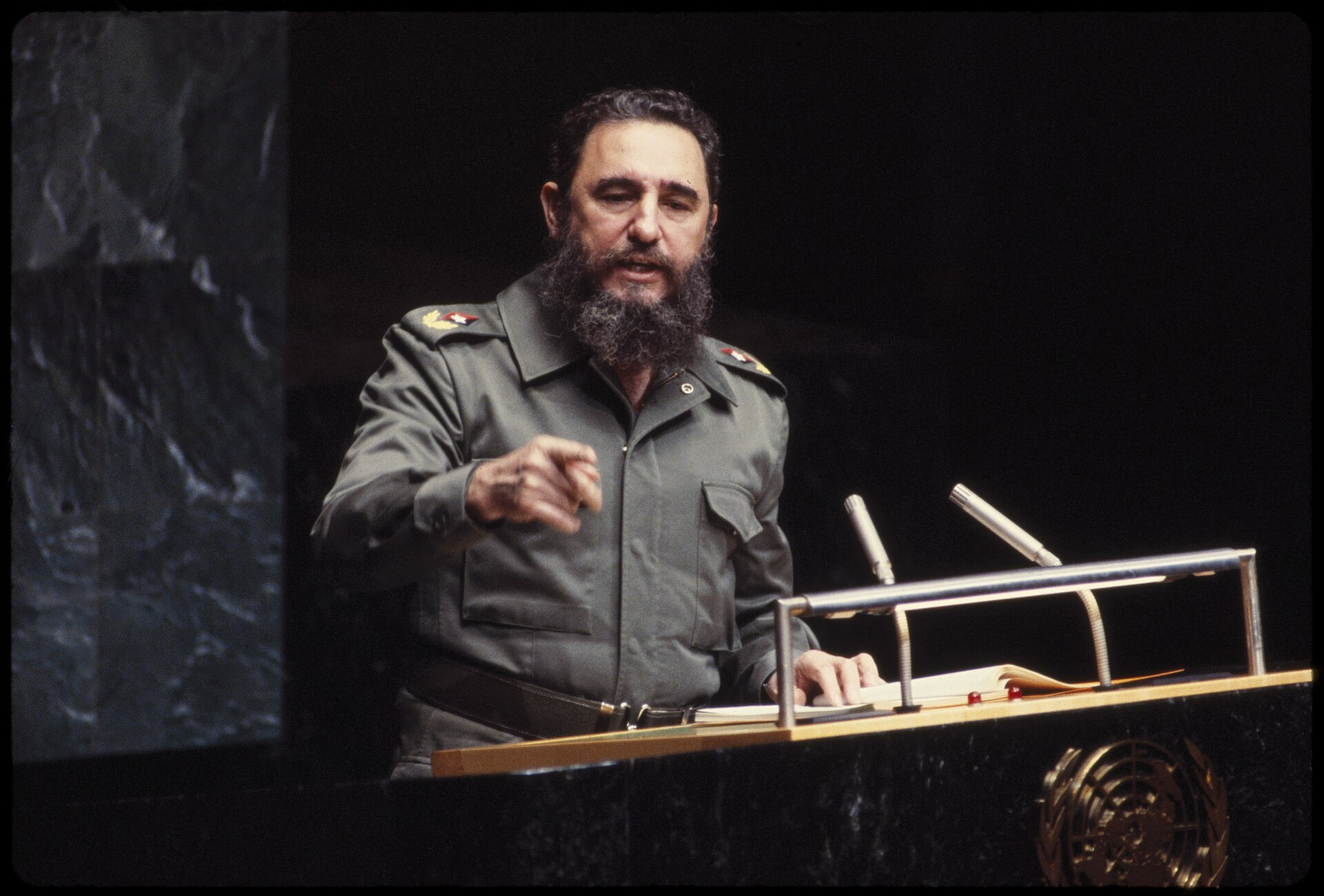
Featured Image: Cuban revolutionary leader Fidel Castro addressing the United Nations in 1979.
Image Credit: Bernard Gotfryd via Wikimedia Commons
License: Creative Commons Licenses