
Venezuela’s interim president, Delcy Rodríguez, met U.S. President Donald Trump in New York on Tuesday, on the sidelines of the UN General Assembly.
The meeting came amid reports that opposition leader María Corina Machado had made three failed and blocked attempts to return to Venezuela over the previous two days. She reportedly tried to travel from Panama to Venezuela via several routes.
Machado is widely seen as the most popular Venezuelan population who many believe should be future president, but Washington is working closely with Rodríguez, the successor to ousted Nicolás Maduro.
Rodríguez, who was formerly vice president, has been in power since Maduro was captured by U.S. forces in January. He is now being held in a New York jail, just a few miles from where Rodríguez met Trump.
Describing the meeting as “historic”, Rodríguez published a photo with her U.S. counterpart on social media.
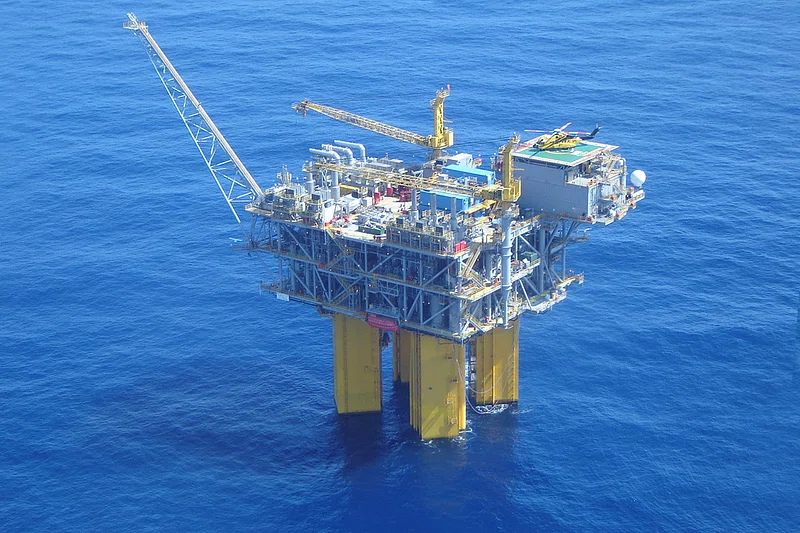
“We discussed strengthening the bilateral relationship between our countries and advancing a cooperation agenda in strategic areas such as energy, mining, and security,” she said in a post on X.
The meeting was also attended by Secretary of State Marco Rubio, Treasury Secretary Scott Bessent, White House Chief of Staff Susie Wiles and Homeland Security Adviser Stephen Miller.
Despite being only a ‘pull-aside’ — the most informal kind of meeting between presidents — analysts say its significance is substantial.
“The symbolism of the meeting is hard to overstate,” Orlando Perez, a Venezuela specialist and professor at the University of North Texas at Dallas, told Latin America Reports.
It was the first face-to-face meeting between a U.S. president and a Venezuelan leader in 11 years, amid the strained relationship between the two countries.
“No U.S. president has sat down with a Venezuelan leader since Obama and Maduro’s brief encounter in Panama in 2015. And nine months after sending in forces to remove Maduro, Trump is now shaking hands with his vice president,” Perez said.
He believes the meeting represents a win for both Rodríguez and Trump.
“Trump walks away with a photo showing his policy working, and Delcy walks away with standing she can use at home and abroad,” he said.
He added the timing of opposition leader Machado’s attempted returns was bold.
“It was ‘cheeky’ of Machado to want to upstage Trump-Rodriguez’s meeting. But both governments are clearly working together to advance a plan in which Machado doesn’t seem to have a role, at least not yet,” he said.
The Nobel Peace Prize winner’s landing by plane in Venezuela was reportedly denied twice by authorities in Venezuela.
Machado left the country in December to revive the Nobel Peace Prize. She’d previously been in hiding.
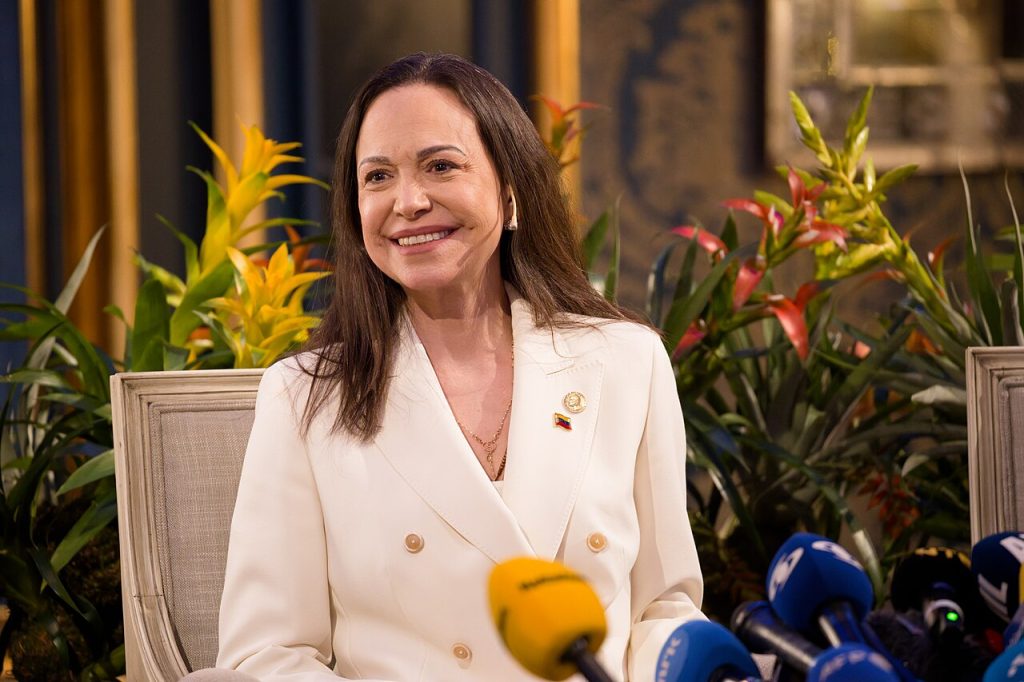
Source: Kevin Payravi via Wikimedia Commons
Opposition leaders have rallied around Machado.
Prominent opposition figure, Juan Pablo Guanipa, tweeted that prohibiting the entry of María Corina Machado’s entry was “unacceptable”.
“No power or authority, internal or foreign, has the legitimacy to prohibit a Venezuelan citizen from entering their country. Let her enter and set the date for the elections.”
Venezuelans lash out at Rodríguez and Trump
Many Venezuelans are concerned that Trump is normalizing Delcy – allowing her to appear at the UN General Assembly and recently striking an oil deal with her – while many don’t recognize her legitimacy.
Before being vice president, Delcy Rodríguez held a number of positions in the chavista regime which many blame for mismanagement and corruption that led to economic collapse, humanitarian crisis, and a mass exodus of people.
Around 7.9 million people have fled the country since around 2014.
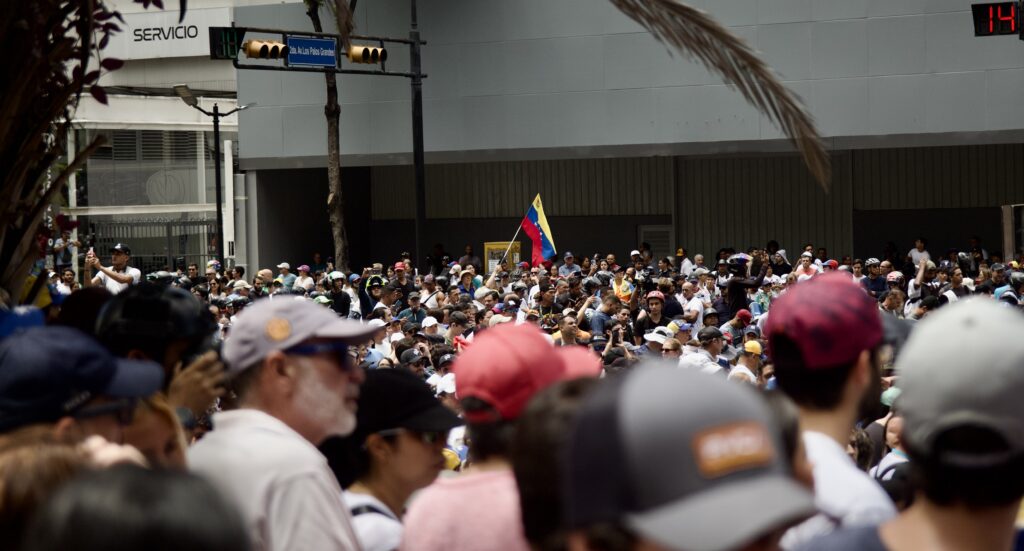
Some Venezuelans living in the U.S. attended a protest held in New York on Tuesday, demonstrating against Rodriguez’s presence at the General Assembly and her presidency more widely, which they see as illegitimate.
Abel Guadarrama, 29, has been in the U.S. for four years. He attended the protest to reject what he calls a “Chavista dictatorship that stays in power at all costs after destroying the country.”
But he also went for another reason – to protest against Donald Trump and his policy toward Venezuela. “Chavismo and Trumpismo equally represent, in my personal opinion, the worst of society and world politics,” he told Latin America Reports.
He says he didn’ t celebrate on January 3 as he was disappointed that only Maduro was taken, and not others from the regime.
“That raised a massive red flag for me, which time has simply managed to confirm.”
Ariana Gonzalez, a 37 year old Venezuelan activist, said she traveled from Washington D.C. to protest against Rodríguez and the political system she continues to represent and lead.
“After years of attacking the United States and using international institutions like the United Nations, she now comes to New York expecting to be treated as Venezuela’s legitimate head of state,” she said.
Gonzalez wants fresh elections, like many who do not support the government.
“If she wins that election fairly, then she will have the democratic legitimacy to represent Venezuela as its head of state in international forums. Until then I do not recognize her as Venezuela’s legitimate president.”
Chavistas back Delcy as Trump hails oil deal
At a speech earlier Tuesday, Trump spoke of what he said his administration had achieved since the capture of Maduro.
“Since that day hundreds of political prisoners have been freed. They’ve let them out of jails and we’re working closely with the leaders of Venezuela to forge a much better future for the Venezuelan people,” he said.
Since 2014, there have been 19,242 political detentions, according to rights group Foro Penal. The NGO says there are currently 344 still in jail.
Trump also referred to the signing of what he called “the largest oil deal in history”, which he said would benefit both the U.S. and Venezuelan people. The deal in August will give the U.S. access to 65 billion barrels of oil.
Chavistas have also long criticized what they refer to as Washington’s imperialist policies and strongly defended resource nationalism. Yet while some chavistas have been against U.S. presence in the country, others believe a new chapter is beginning for the country – and Delcy has the chance to represent them on the world stage.
Interior Minister Diosdado Cabello praised Rodriguez’s participation as “a triumph for peace diplomacy”, saying that it caused “an emotional crisis for the opposition.” Cabello is arguably Venezuela’s most feared politician and still has a US$25m bounty, accused of narco terrorism and cocaine trafficking.
Those who still support the government celebrated Rodriguez’s participation in the event and meeting Trump.
“Everything the Venezuelan government can do from an international perspective, such as any form of public appearance that shows we are a democratic government and sovereign people, is positive for the nation,” he said.
“It’s an opportunity to show the world that Venezuela exists, that Venezuela is an option for doing business, for making investments, and also an option for building relations for the benefit of the countries around the world,” Chavista Maximo Mendoza said.
The Venezuelan government and part of the opposition have also been holding talks back in Caracas aimed at strengthening institutions and eventually leading to elections.
Rodriguez is due to make a speech to the UNGA on Wednesday.
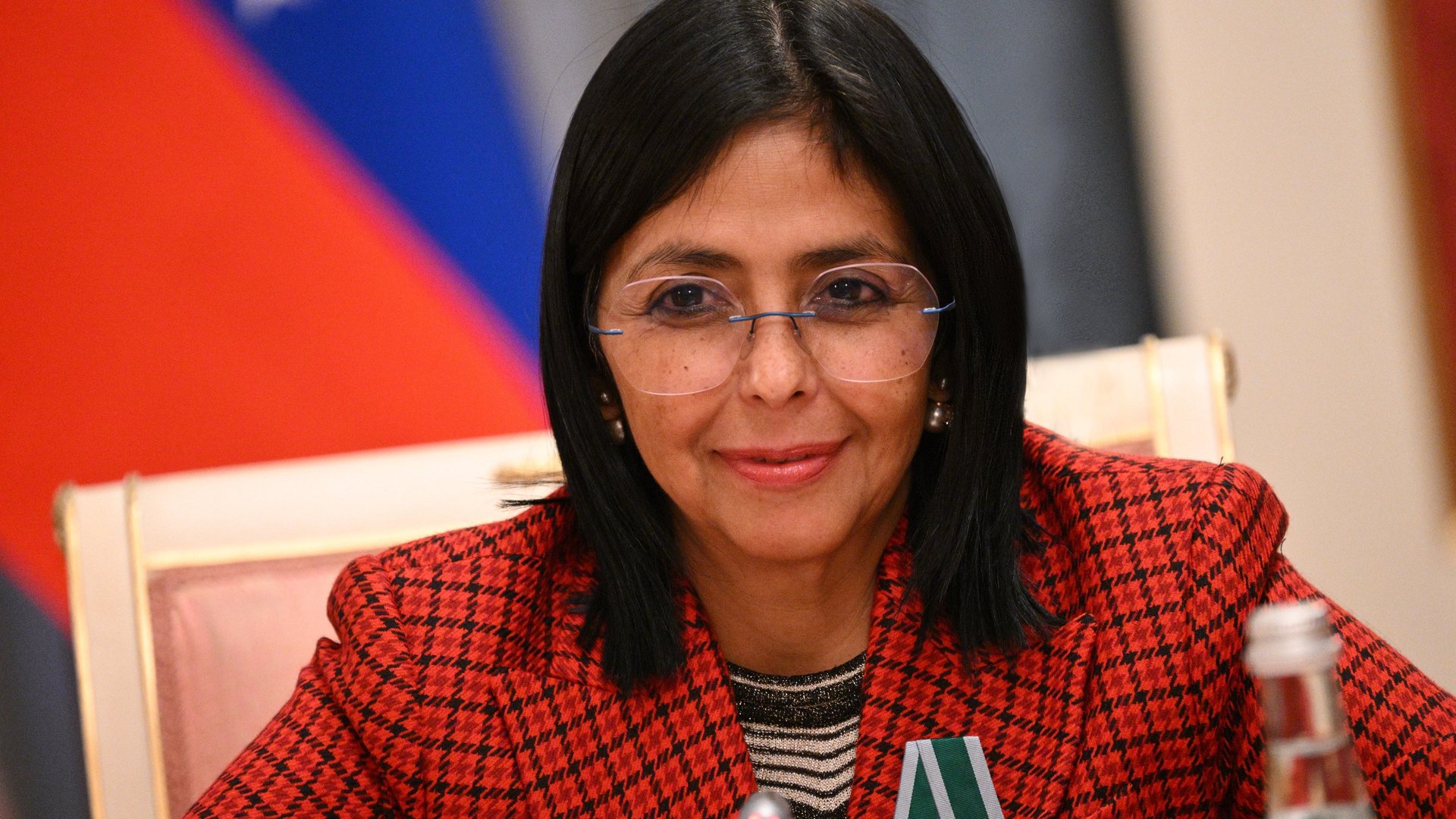
Featured image description: Delcy Rodriguez.
Featured image credit: Government of Russia via Wikimedia Commons